



















How to Receive Money from Abroad in Nigeria: Freelancers & Exporters (2026)
Author Noella Lepdung
Introduction
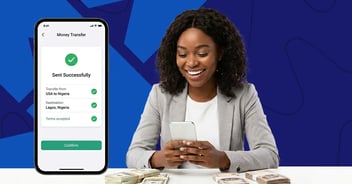
If you code for a US agency from Yaba, design brand kits for a UK studio, or ship dried hibiscus to a Berlin importer, the hard part is rarely landing the work. It is working out how to receive money from abroad in Nigeria without losing a third of it to fees, bad exchange rates and dead time at the receiving bank.
This guide walks Nigerian freelancers and small exporters through the practical options in 2026, the paperwork they need, the real cost of each route, and the quiet mistakes that cost the most. If you prefer the matching outbound playbook, we cover it in our guide to sending money abroad from Nigeria.
What Receiving Money from Abroad Really Means
In practice, money from an overseas client reaches Nigeria through one of four main rails. The oldest is the SWIFT route into a domiciliary account at a Nigerian bank, where the funds arrive in the currency sent and sit there until you ask the bank to convert them. The second is a virtual multi-currency account issued by a licensed collections platform, which gives you a real US bank routing number or a UK sort code that clients pay as though paying someone local in that country.
The third is a payout from a freelance marketplace or employment platform, such as Upwork, Fiverr, Deel or Remote, which handles collection for you and lets you withdraw to a NG bank or app. The fourth is to run payments through a card processor such as Stripe via a supported non-Nigerian entity, usually where the freelancer or exporter has a foreign company structure. Most Nigerian freelancers in 2026 use the second rail for day-to-day work, the first for larger one-off exports, and the third when the client refuses to leave their chosen platform. For receivers without a domiciliary account, our guide to receiving USD, GBP or EUR without a dom account covers the lighter set-up.
Two regulatory changes shape the picture this year. The Central Bank of Nigeria's remittance circular issued in March 2026 and effective in May 2026 requires IMTOs to use real-time Bloomberg BMatch pricing on the naira leg of any conversion, which has narrowed the gap between app rates and official bank rates for inbound transfers. Separately, the Nigeria Tax Act 2025 (effective January 2026) brought freelance and export income received from abroad firmly into the FIRS reporting net, so record keeping now matters more than it did a year ago.
What You'll Need
Before you can receive a single transfer, you need a short checklist in place. Missing any one of these turns a two day payment into a two week nightmare.
✓A Bank Verification Number (BVN), linked to your NG bank account
✓A National Identification Number (NIN)
✓A valid government-issued photo ID (passport or driver's licence)
✓Proof of address, usually a utility bill or a bank statement dated within the last three months
✓For a domiciliary account, the bank's minimum opening balance (usually $100, sometimes higher at tier-1 banks)
✓For a virtual multi-currency account, the platform's KYC pack, which varies but typically mirrors the above
✓A clear invoice template with your account details, SWIFT code, and the receiving currency named explicitly
If you invoice under a registered business name rather than your personal name, you will also want a CAC registration, a Tax Identification Number (TIN) tied to the business, and a corporate bank or dom account in the business name. Several collection platforms now accept CAC-registered entities, which is useful if you want to keep business and personal flows separate.
Step-by-Step: How to Receive Payment from an International Client
1Match the rail to the payment pattern
Think about how often you will receive money and how big each payment is. A once-a-year export shipment of ₦15 million equivalent probably belongs in a domiciliary account. A recurring $800 monthly retainer is better off landing in a virtual USD account where the per-transaction cost is lower and the funds clear faster.
2Open the right account
If you go the dom account route, book an appointment at a tier-1 bank branch and bring every document on the checklist. Typical KYC runs five to ten business days. If you choose a virtual account, pick a licensed platform (we discuss how to vet them in Step 5), submit your KYC pack through the app, and expect activation inside 24 to 72 hours.
3Share your receiving details professionally
For a dom account, send your client the bank name, your full name as it appears on the account, the account number, and the SWIFT or BIC code. For a virtual account, share the ACH routing number and account number for US clients, or the sort code and account number for UK clients. Never share your BVN or NIN with a client. They do not need it, and sharing it creates fraud exposure.
4Invoice in the exact currency and terms
Name the currency in the invoice ("USD 1,500", not "$1,500" alone, which some non-US clients read as their local dollar). State the payment term ("Net 15 from invoice date"). Include your tax ID where the client needs it for their own records. Save the invoice as a PDF, not a shareable link, and keep a copy for FIRS reporting.
5Track the transfer
Dom account transfers over SWIFT typically arrive in two to five business days. Ask your client for the SWIFT reference number ("MT103") the moment they send; it is the only reliable way to trace a stuck transfer. Virtual account transfers show up in the app, usually within hours for ACH or SEPA and up to two days for international wires. If funds are more than one day late by platform estimate, raise a ticket.
6Decide whether to convert or hold
When the dollars land, you have a choice. Convert to naira now at today's rate, or hold the USD until you need naira or until the exchange rate improves. Converting at the right moment can be worth more than any fee you paid to receive the money. Platforms that let you hold USD and spend it directly via a virtual card are increasingly common.
7Withdraw to naira (if converting)
From a virtual account, withdrawing to your NG bank is usually a one-tap conversion followed by a local transfer. Check two things before confirming: the rate quoted (compare it to the Bloomberg BMatch rate the IMTO is required to use) and the withdrawal fee. From a dom account, you can book an FX conversion with the bank or move the dollars to an IMTO and convert there.
8Keep records for FIRS and CBN
Save every invoice, every proof of payment, and every conversion receipt. Under the Nigeria Tax Act 2025, income earned from foreign clients is taxable in Nigeria, and the FIRS has started cross-checking declared freelance income against known platform payouts.
Important
Keep a copy of every SWIFT MT103 or platform payment advice. If a transfer gets stuck at the intermediary bank, the MT103 is the only reference that lets your bank raise a trace.
Cost Breakdown: Where the Money Goes
The quoted fee is almost never the full fee. For a $1,000 payment on each rail, the typical cost in 2026 looks like this.
On a SWIFT transfer into a dom account, the sender pays around $25 to $30 at their bank. An intermediary (correspondent) bank typically deducts another $15 to $25 as the funds pass through. Your Nigerian receiving bank then charges around $10 to $15. If you convert immediately to naira at the bank, the FX spread, meaning the gap between the mid-market rate and the rate you are offered, usually costs another 1% to 2%. All in, a $1,000 SWIFT payment often lands in your account as ₦ with the equivalent of roughly 7% to 10% lost along the way.
On a virtual multi-currency account, the platform charges 1% to 2% on receipt and typically 0.5% to 1% on the naira conversion. All in, the same $1,000 lands with roughly 1.5% to 3% lost. For small, frequent payments, that gap is the difference between a sustainable freelance career and an unsustainable one. For large, infrequent payments, the SWIFT route may still make sense because the fixed fees do not scale with amount.
Good to know
The parallel market is not a legitimate route for inbound transfers. Stick to licensed banks, licensed IMTOs and licensed collection platforms. The CBN publishes updated lists of licensed IMTOs and digital BDCs on its website.
Common Mistakes to Avoid
1. Sharing your personal NGN savings account number for USD payments. The bank will often reject the wire or hold it for compliance review. Use a dom account or a virtual USD account.
2. Auto-converting USD to naira the moment it arrives. Unless you need the naira now, holding the USD lets you choose your conversion moment. Over months of volatility, this routinely pays for itself.
3. Using unlicensed collection platforms because a friend recommended them. The platform should be licensed in the jurisdiction it operates from, and its parent company should be identifiable. The FCA, FINTRAC, Bank of Ghana and CBN all publish licence registers.
4. Budgeting only the headline fee. The FX spread is where most of the cost hides. A platform advertising a 1% fee but offering a rate 2% off the mid-market is a 3% platform.
5. Missing FIRS and CBN reporting. Keep every receipt. If total inflows cross reporting thresholds, you have declaration duties, and the newer tax law has sharpened penalties.
nairaCompare Insight
Expert analysis · Research Team
If you are receiving $500 to $2,500 per client payment across a mix of retainers and project fees, your two biggest leaks are the FX spread on each conversion and the dead time while SWIFT funds clear. Our collection-platform comparison lets you line up providers such as Geegpay, Grey, Raenest, Payoneer, Wise Business and Foren Collections on fee, settlement time, supported corridors and licence, so you can pick on the two numbers that actually matter: how much lands in naira, and how fast.
For exporters moving larger infrequent amounts (typically ₦5 million to ₦30 million equivalent per shipment), the calculation inverts. A domiciliary account at a tier-1 bank handles the size, the CBN documentation and the Form M flow in one place, while an IMTO or collection platform handles the conversion separately at a better rate. The combined route, dom in, convert elsewhere, often beats both pure routes.
Frequently Asked Questions
Can I receive USD without a domiciliary account?
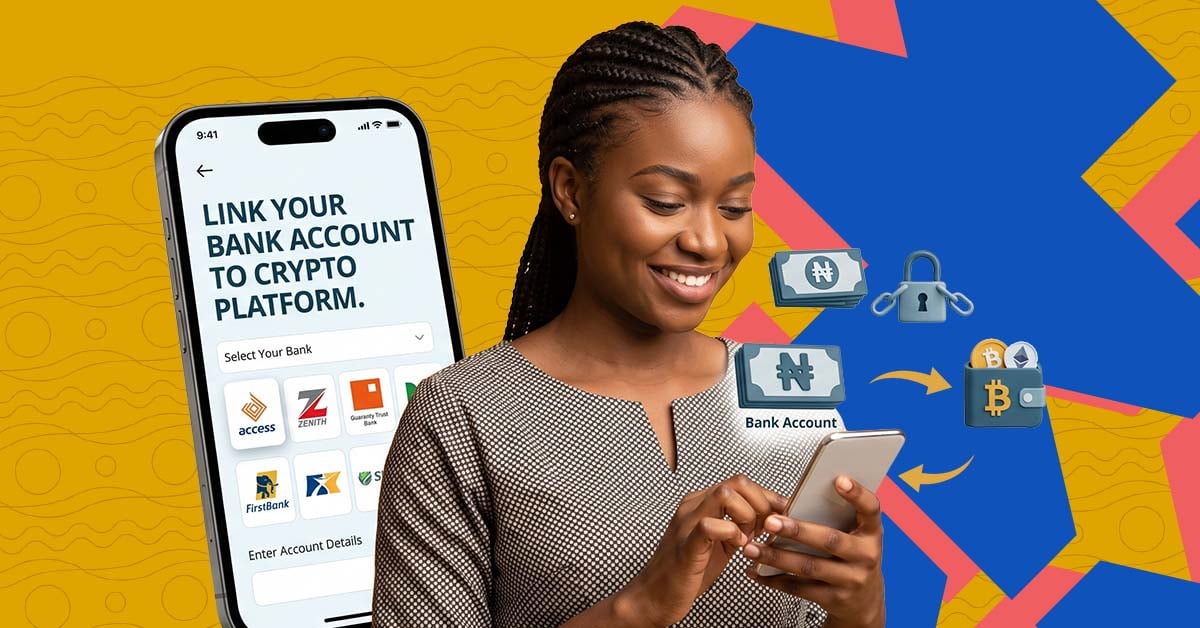
Yes. A licensed virtual multi-currency account from a platform such as Geegpay, Grey, Raenest or Payoneer gives you a real US routing number or UK sort code that clients pay like a local bank account. The USD then sits in the app until you convert or spend it.
How long does a SWIFT transfer take to reach Nigeria?
Typically two to five business days. If you are inside day six with no arrival, ask the sender for the MT103 reference and open a trace through your bank. Most "stuck" SWIFT transfers sit at the intermediary bank, not the receiving one.
What is the difference between a virtual USD account and a real domiciliary account?
A dom account is a Nigerian bank account held in a foreign currency, directly under your name at a NG bank. A virtual USD account is an account issued by a licensed overseas platform or its banking partner, with a foreign bank's routing details, that you access through an app. Both are legitimate; they serve different use cases.
Do I need to pay tax on income received from abroad?
Yes. Under the Nigeria Tax Act 2025 (effective January 2026), income earned from foreign clients and received in Nigeria is taxable, and the FIRS has sharpened its enforcement. Keep invoices, payment receipts and conversion records for every inflow.
Why does my bank convert my USD to naira automatically?
It does not, unless you asked it to. If funds arrive in a NGN savings account instead of a dom account, the bank will often convert at the counter rate because the account can only hold naira. To hold USD, the funds must land in a dom account or a virtual USD account.
Is it legal to hold USD in Nigeria?
Yes. Holding USD in a licensed Nigerian domiciliary account, or in a licensed multi-currency platform, is legal. What is regulated is how you convert and move those funds, especially in volume. Follow CBN guidance, and keep documentation of the source.
What is the Bloomberg BMatch rate, and does it affect me?
It is the real-time wholesale naira rate that IMTOs are required to reference for the naira leg of inbound remittances, under the CBN March 2026 circular (effective May 2026). In practice, it has narrowed the gap between the official bank rate and the rate an IMTO or collection platform can offer you.
Compare before you receive
Line up licensed collection platforms, dom accounts and IMTOs side by side on fee, settlement time and rate.
Compare send-money options →Conclusion
Receiving money from abroad in Nigeria is cheaper, faster and more transparent in 2026 than it has been in years, provided you match the rail to the payment, pick licensed providers, and watch the FX spread as carefully as you watch the headline fee. The costly mistakes all cluster at the same points: wrong account type, auto-conversion at the wrong moment, unlicensed intermediaries, and poor records.
If you are setting up a new receiving flow, start by pricing the two to three realistic routes side by side on fees, settlement time and rate. Our comparison tools pull live data across Nigerian banks, licensed IMTOs and multi-currency collection platforms, so the choice does not depend on guesswork. Set up the rail that fits how you actually get paid, not the one your friend uses.
Exchange rates fluctuate. Rates shown are indicative and may differ at time of transaction. Verify terms with your provider before relying on specific figures. This article is for informational purposes only and does not constitute financial advice.
About Author
Noella Lepdung
Noella Lepdung, LL.B, is a strategist and writer specialising in financial services, SEO, and digital content. With a background in brand storytelling and organic growth, she creates research-driven content that makes complex topics accessible, engaging, and useful to readers. Her experience spans financial services, healthcare, and consumer brands, and her portfolio includes work for brands such as nairaCompare, Monieworx, Leadway Group, Budweiser, The Coca-Cola Company, Nivea, and Honeywell Foods.


Other related articles