


.png?width=40&height=40&name=Rectangle%202052%20(2).png)
.png?width=40&height=40&name=Rectangle%202052%20(1).png)





.jpg?width=1200&height=628&name=Your%20Complete%20Guide%20to%20Comparing%20Health%20Insurance%20Plans%20for%20Businesses%20in%20Nigeria%20(2026%20Edition).jpg)
.png?width=1266&height=427&name=blog%20header%20(27).png)
.webp?width=1266&height=427&name=blog%20header%20(38).webp)
%20(1).jpg?width=1200&height=628&name=Complete%20Guide_%20Sending%20Money%20from%20UK%20to%20Nigeria%20(2026)%20(1).jpg)


.webp?width=1200&height=628&name=Health%20Insurance%20Cost%20Report%20(2026).webp)
.png?width=1266&height=427&name=blog%20header%20(19).png)
.png?width=1266&height=427&name=blog%20header%20(30).png)
Common Car Insurance Mistakes to Avoid in Nigeria
Author Noella Lepdung
Introduction
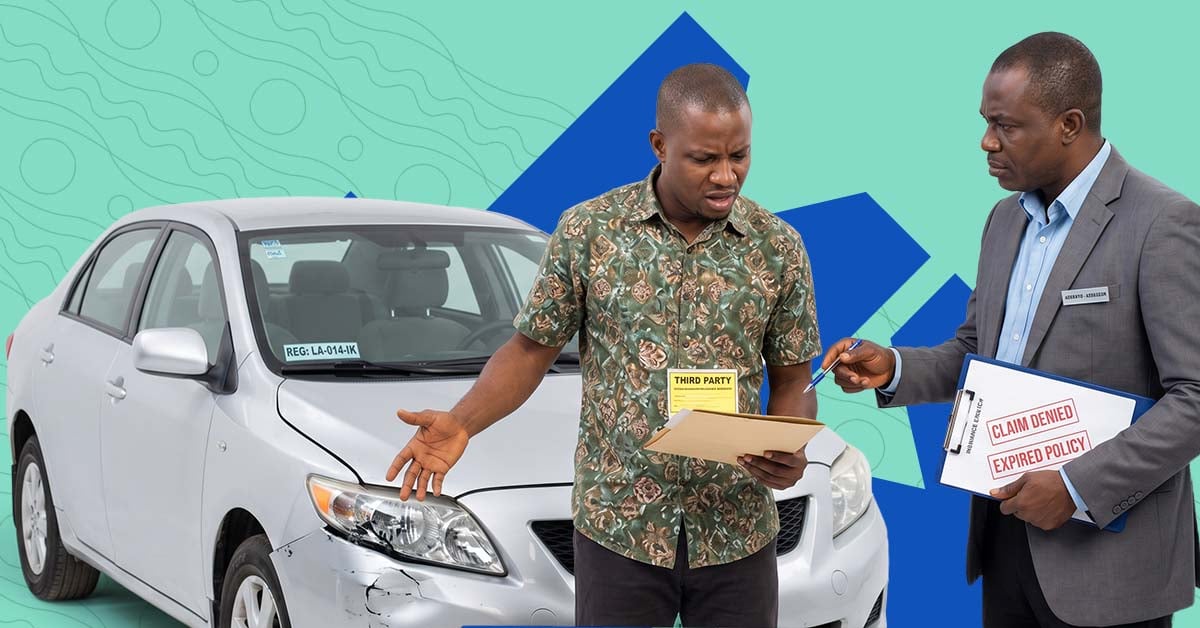
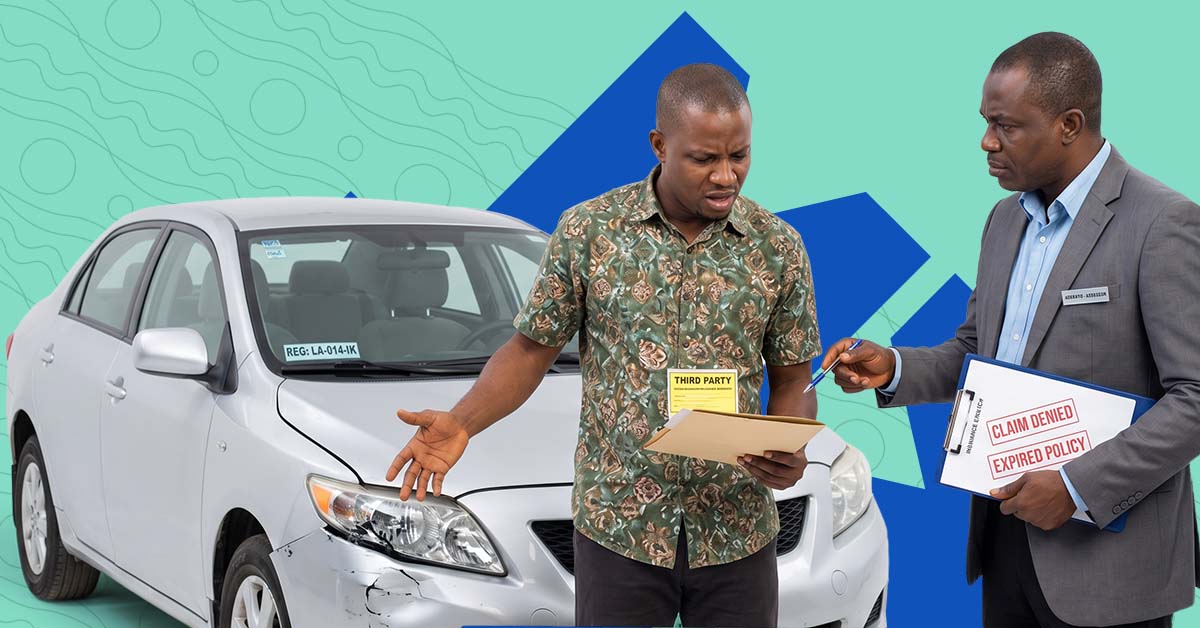
You paid for car insurance. You have the certificate on your dashboard. Then an accident happens and the claim is rejected, or the payout barely covers half the repair bill, or the policy turns out to be fake. For most Nigerian drivers, the problem was not the insurer. It was a decision made at the point of purchase that went unexamined.
This guide walks through the most common car insurance mistakes Nigerian drivers make, from buying the wrong cover to insuring at the wrong value to skipping verification entirely. If you are renewing shortly, this is a useful read before you sign anything.
Table of Contents
- What Makes Car Insurance Go Wrong
- Mistake 1: Buying the Cheapest Policy Without Checking What It Covers
- Mistake 2: Choosing Third-Party Insurance for a High-Value Vehicle
- Mistake 3: Underinsuring Your Vehicle (Getting the IDV Wrong)
- Mistake 4: Falling for Fake Motor Insurance Certificates
- Mistake 5: Not Reading the Exclusions
- Mistake 6: Renewing Automatically Without Comparing
- Mistake 7: Failing to Notify Your Insurer Promptly After an Incident
- Mistake 8: Insuring a Commercial Vehicle as a Private One
- Mistake 9: Not Asking About Available Discounts
- Mistake 10: Ignoring the Claims Process Until You Need It
- nairaCompare Insight
- FAQs
- Related Resources
- Conclusion
- Disclaimer
What Makes Car Insurance Go Wrong
Car insurance fails Nigerian drivers at two distinct moments: at purchase and at the point of claim. Most mistakes happen at purchase, but their consequences only become visible much later, when it is too late to correct them.
Understanding the ten mistakes below gives you a practical checklist to run through before renewing or buying a new policy. Each one is fixable before you sign.
Mistake 1: Buying the Cheapest Policy Without Checking What It Covers
Price is the first thing most drivers look at and, for many, the only thing. The result is policies that cost ₦5,000 or ₦8,000 per year and cover very little beyond the minimum legal requirement.
There is nothing wrong with buying affordable insurance. The problem is buying cheap insurance without understanding what “affordable” actually means for your situation. Two policies at the same price can differ significantly on third-party property damage limits. One insurer may offer a ₦3 million limit; another may cap it at ₦1 million. If you cause ₦2.5 million in damage to another vehicle, the ₦1 million policy leaves you personally liable for ₦1.5 million. The premium difference may be negligible. The claims difference is not.
How to avoid it: Compare at least three quotes side by side and look at five things: premium, third-party property damage limit, exclusions, deductible, and the insurer’s claims reputation. Price is one of five, not the only one.
Mistake 2: Choosing Third-Party Insurance for a High-Value Vehicle
Third-party insurance is the legally required minimum. It protects other people when you cause an accident. It does not protect your own vehicle in any circumstance: not if it is stolen, not if it is written off in a collision, not if it burns in a fire or floods.
Many Nigerian drivers opt for third-party cover on vehicles worth ₦5 million, ₦8 million, or more, believing the premium savings justify the risk. They rarely do. Consider: comprehensive insurance on a ₦5 million vehicle at a standard 5% rate costs approximately ₦250,000 per year. Replacing that vehicle if it is stolen costs ₦5 million. Saving ₦245,000 annually makes financial sense only if you can comfortably replace the vehicle from savings within a year or two. For most drivers, that is not the case.
How to avoid it: A useful rule of thumb is that if your vehicle is worth more than six to twelve months of your gross income, comprehensive cover is the more financially rational choice. If your vehicle is worth under ₦2 million and you can absorb a total loss, third-party may be sufficient.
Mistake 3: Underinsuring Your Vehicle (Getting the IDV Wrong)
The Insured Declared Value (IDV) is the current market value of your vehicle at the time of insurance. It forms the basis of your comprehensive premium and the maximum amount your insurer will pay if the vehicle is written off or stolen.
Many drivers declare a lower IDV to reduce their premium. This is a false saving. Under the proportional average clause applied by most Nigerian insurers, if your vehicle is insured at ₦3 million but its actual market replacement value is ₦4 million, the insurer will only pay 75% of any claim (₦3 million divided by ₦4 million). A ₦2 million repair bill becomes a ₦1.5 million payout, leaving you to cover ₦500,000 out of pocket. The premium saving from underinsuring by ₦1 million may be ₦50,000. The exposure is ten times that.
How to avoid it: Insure at the current market replacement value of your vehicle, not the purchase price and not an artificially low figure. Check online car marketplaces or ask your insurer for a current valuation. Update the IDV each renewal year as the vehicle depreciates.
Mistake 4: Falling for Fake Motor Insurance Certificates
NAICOM estimates that 60% of motor insurance papers on Nigerian roads are counterfeit. This is not a marginal problem. More than half of all vehicle certificates currently in circulation may be fraudulent. A fake policy does not provide any coverage at all. It is a worthless document that passes FRSC checks visually but fails at the point of claim.
Fake certificates are issued by bad actors operating as roadside agents, via WhatsApp, and occasionally through informal brokers at prices that seem competitive because no actual insurance is being provided. Drivers often only discover the certificate is fake when they need to file a claim.
How to avoid it: Before paying for any motor insurance policy, verify the insurer’s NAICOM licence on the NAICOM website. After purchase, verify the policy itself via the Nigeria Insurance Industry Database (NIID) at niid.com.ng using your vehicle plate number or chassis number. Verification is free and takes under two minutes.
Mistake 5: Not Reading the Exclusions
Every insurance policy contains exclusions: events and circumstances the policy does not cover. Most drivers never read them until something goes wrong.
Common exclusions in Nigerian motor insurance policies include flood damage (excluded in some policies, included in others as a specific rider), riot and civil commotion, driving under the influence of alcohol or drugs, mechanical or electrical breakdown, damage whilst driving without a valid licence, and using a private vehicle for commercial purposes. The last two are particularly significant. Using a privately insured vehicle for ride-hailing or commercial deliveries without notifying the insurer may invalidate the policy entirely.
How to avoid it: Request the policy document before paying, not after. Read the exclusions section specifically. Ask the insurer or broker to clarify any exclusion you do not understand. If flood coverage matters to you, given that Nigerian cities like Lagos and Benin experience regular flooding during the rainy season, confirm explicitly whether it is included or available as an add-on.
Mistake 6: Renewing Automatically Without Comparing
Most drivers renew with the same insurer, at approximately the same rate, year after year. It feels efficient. In practice, it is a recurring overpayment.
Premium rates across Nigerian insurers are not uniform. The same vehicle with the same cover type can attract premiums that differ by 30% to 50% between providers. An insurer that was competitive two years ago may have adjusted their pricing upward. A competitor may now offer better coverage limits at the same or lower cost. Without comparing, you have no way of knowing.
How to avoid it: Treat every renewal as a fresh buying decision. Get quotes from at least three to five NAICOM-licensed insurers. Compare on the five elements mentioned in Mistake 1, not price alone. The comparison can be completed in under 30 minutes using online tools, and the potential annual saving on a comprehensive policy is real and recurring.
Mistake 7: Failing to Notify Your Insurer Promptly After an Incident
Most motor insurance policies in Nigeria include a notification clause requiring you to inform the insurer within a specified period after any accident or incident, regardless of whether you intend to file a claim. This window is typically 24 to 72 hours. Missing it can give the insurer grounds to reduce or reject your claim entirely.
Nigerian drivers frequently delay notification for practical reasons: sorting out the immediate aftermath of an accident takes time, documentation feels overwhelming, and many drivers assume notification only matters when they intend to claim. This assumption is incorrect. Notification and claims filing are two separate steps. Notify first, then decide whether to claim.
How to avoid it: Save your insurer’s claims notification number in your phone before you need it. When an incident occurs, notify the insurer within the required window even if you are unsure whether the damage warrants a claim. Document everything at the scene: photographs, third-party details, witness information, and the police report number if one is filed.
Mistake 8: Insuring a Commercial Vehicle as a Private One
Commercial vehicles, including vehicles used for ride-hailing, deliveries, staff transportation, and taxis, attract higher premiums than private vehicles because they spend more time on the road and carry more passengers or goods. This is actuarially sound: more road time means more exposure to risk.
Some drivers insure commercially-used vehicles under private policies to pay the lower premium. If the insurer discovers the vehicle was being used commercially at the time of an incident, the policy may be voided. No claim will be paid. This is not a loophole; it is a material misrepresentation that invalidates the contract.
How to avoid it: Disclose your vehicle’s actual usage to the insurer at the time of purchase. If your usage changes during the policy term, notify the insurer immediately. The additional premium for commercial use is modest compared to the risk of a voided claim.
Mistake 9: Not Asking About Available Discounts
Insurers offer a range of discounts that most policyholders never access because they do not ask. These include age-based discounts for drivers aged 45 and above (Coronation Insurance offers 15% in this category), no-claims bonuses for claim-free years (up to 15% at some insurers after two to three consecutive years), Some insurers provide discounts for vehicles fitted with approved security devices such as trackers or immobilisers. Discount levels vary by insurer., fleet discounts for businesses insuring multiple vehicles, and online purchase discounts of 5% to 10% at certain insurers.
The aggregate saving from qualifying for two or three discount categories on a comprehensive policy can be ₦30,000 to ₦80,000 annually.
How to avoid it: At every renewal, ask the insurer directly: “What discounts am I eligible for?” Do not assume you have been applied automatically. Document any discounts agreed and verify they are reflected in your final premium.
Mistake 10: Ignoring the Claims Process Until You Need It
Many drivers never investigate how their insurer handles claims until they need to file one. By then, discovering that the process is slow, documentation-heavy, or that the insurer uses low-quality repair workshops is no longer useful information.
Claims settlement quality varies significantly across Nigerian insurers.Leadway Assurance is regarded as one of Nigeria’s largest insurers by claims volume and market presence. Verify current claims-payment figures directly from the company’s latest annual report before publication. The NIIRA 2025 set prescribed regulatory timelines for settlement, but actual processing experiences continue to vary between providers. Choosing an insurer based on premium alone, without considering their claims record, is choosing on one factor while ignoring the one that matters most when you need them.
How to avoid it: Before purchasing or renewing, ask the insurer: what is your average claims settlement timeline for motor insurance? What repair workshops do you use, and do they use genuine manufacturer parts? What documentation is required at the claims stage? If the answers are vague, that is useful information too.
nairaCompare Insight
For a married professional in Lagos driving a vehicle worth ₦5 million to ₦8 million on daily commutes, the most financially significant mistake is typically Mistake 3: underinsuring. Lowering the IDV by ₦1 million to save ₦50,000 on premium creates an exposure that can cost ₦500,000 or more when a major claim arises. The second risk is Mistake 7: not notifying promptly after an incident. On Lagos roads, minor collisions are common, and the reflex is often to resolve informally. Keeping your insurer’s notification number accessible and calling within the required window protects your right to claim later, even if the initial damage seems manageable.
For a young professional in Abuja on a budget, Mistake 4 deserves the most attention. A third-party certificate at ₦5,000 from an unlicensed agent may look identical to a legitimate policy, but it provides no actual cover. Verification via the NIID costs nothing and takes two minutes. Our comparison tools on nairaCompare allow you to see quotes from NAICOM-licensed insurers side by side, so whether you are looking for budget third-party cover or the most competitive comprehensive rate available, you are comparing real policies from regulated providers.
FAQs
What is the most common car insurance mistake Nigerian drivers make?
Buying from bad actors issuing fake or counterfeit certificates is one of the most costly mistakes, given that NAICOM estimates 60% of motor insurance papers on Nigerian roads are counterfeit. Equally common is underinsuring by declaring a low IDV to reduce premium, which triggers proportional payout reductions at the claims stage.
What happens if I have a fake car insurance certificate?
A fake certificate provides no coverage at all. If you are involved in an accident, no claim will be paid. If FRSC or VIO identifies the certificate as fraudulent during a roadside check, you may face prosecution, fines, and vehicle impoundment. Always verify any policy via the NIID before relying on it.
Can I reduce my car insurance premium legitimately?
Yes. Ask your insurer about no-claims bonuses, age-based discounts, security feature discounts for vehicles with tracking devices or immobilisers, and online purchase discounts. Annual payment rather than instalments also typically costs less. Avoid reducing your IDV to save on premium, as this creates disproportionate exposure at the claims stage.
Does car insurance cover flooding in Nigeria?
It depends on the policy. Some comprehensive policies include flood damage as standard; others offer it as an optional rider; some exclude it entirely. Given the frequency of urban flooding in Nigerian cities, this is worth confirming explicitly before purchasing. Do not assume flood cover is included.
What is the difference between third-party and comprehensive car insurance?
Third-party insurance covers damage you cause to others and their property. It is the legal minimum and does not cover your own vehicle for any reason. Comprehensive insurance covers third-party liability plus your own vehicle against theft, accidents, fire, flood, and vandalism. The right choice depends on your vehicle’s value and your ability to absorb a total loss.
How do I know if my car insurance certificate is genuine?
Visit niid.com.ng and enter your vehicle plate number or chassis number. The Nigeria Insurance Industry Database (NIID) will confirm whether a valid, active policy is registered. You can also verify the insurer’s NAICOM licence on the NAICOM website. Both checks are free.
What should I do immediately after an accident?
Ensure safety first, then document the scene with photographs, collect third-party details and any witness contacts, and notify your insurer within the policy’s required notification window, typically 24 to 72 hours. Do not wait until you have decided whether to file a formal claim; notify first, then decide.
Is it cheaper to insure a commercial vehicle as a private one?
It may appear cheaper initially, but using a commercially-insured vehicle under a private policy is a material misrepresentation. If the insurer discovers this at the claims stage, the policy can be voided entirely, leaving you with no coverage and no recourse.
Conclusion
Most car insurance problems in Nigeria are preventable. They trace back to a handful of decisions made at purchase: choosing on price alone, declaring a low IDV, falling for fake certificates issued by bad actors, or overlooking exclusions. None of these mistakes requires specialist knowledge to avoid. They require time, the right questions, and a process that goes beyond calling the same agent every renewal.
The ten mistakes in this guide give you a practical framework to apply before your next renewal. Run through them, confirm the five comparison elements, verify your insurer’s NAICOM licence, and check your IDV against current market value. Use our comparison tools on nairaCompare to see quotes from NAICOM-licensed insurers side by side, and make a decision based on complete information rather than a single number.
This guide is for informational purposes only and does not constitute insurance or financial advice. Terms and conditions apply. Please verify all details with the provider before purchasing.
About Author

Noella Lepdung
Noëlla Lepdung is a writer who makes magic with all sorts of content, helping businesses find their voice and meet their ambitions with cutting-edge but human-first advertising. Her portfolio features brands such as Budweiser, The Coca-Cola Company, Nivea, Leadway Group, Honeywell Foods, Monieworx, Kimberly-Clark, and WAMCO.


Other related articles

.jpg?width=352&name=Car%20Insurance_%20What%20to%20Compare%20(Coverage%2c%20Excess%2c%20Perks%20%26%20Premium).jpg)