


.png?width=40&height=40&name=Rectangle%202052%20(2).png)
.png?width=40&height=40&name=Rectangle%202052%20(1).png)




.jpg?width=1200&height=628&name=Your%20Complete%20Guide%20to%20Comparing%20Health%20Insurance%20Plans%20for%20Businesses%20in%20Nigeria%20(2026%20Edition).jpg)
.png?width=1266&height=427&name=blog%20header%20(27).png)
.webp?width=1266&height=427&name=blog%20header%20(38).webp)
%20(1).jpg?width=1200&height=628&name=Complete%20Guide_%20Sending%20Money%20from%20UK%20to%20Nigeria%20(2026)%20(1).jpg)
.webp?width=1200&height=628&name=Health%20Insurance%20Cost%20Report%20(2026).webp)

.png?width=1266&height=427&name=blog%20header%20(19).png)
.png?width=1266&height=427&name=blog%20header%20(30).png)
Author Noella Lepdung
Introduction
If you own cryptocurrency in Nigeria, where you keep it matters as much as what you own. Exchange restrictions, phishing attacks, and platform failures have cost Nigerian crypto users significant sums that careful storage could have prevented. This article explains what a crypto wallet is, how the different types work, which options suit Nigerians in 2026, and how to set one up safely from scratch.
Table of Contents
- Quick Definition: What Is a Crypto Wallet?
- What Is a Crypto Wallet and Why It Matters
- How Crypto Wallets Work
- Types of Crypto Wallet
- How to Create a Crypto Wallet
- Common Misconceptions
- nairaCompare Insight
- Quick Recap
- FAQs
- Conclusion

Quick Definition: What Is a Crypto Wallet?
A crypto wallet is a tool that stores the private keys needed to access and control your cryptocurrency on the blockchain; it does not hold coins directly, but determines who has the authority to move them.
What Is a Crypto Wallet and Why It Matters
Cryptocurrency does not sit inside a wallet the way naira sits in a bank account. Your coins live on the blockchain. What a wallet stores is your private key, a unique cryptographic code that proves ownership and authorises every outgoing transaction. Lose the private key without a backup, and your crypto is gone permanently. Share it with the wrong person, and your funds can be drained in seconds.
For Nigerian crypto users, wallet choice carries particular weight in 2026. The Investment and Securities Act 2025 (ISA 2025) formally recognised cryptocurrency as a regulated asset class, while the Nigerian Tax Administration Act 2025 introduced reporting obligations for taxable crypto transactions. Platform restrictions, exchange blocks, and the evolving regulatory landscape mean that treating an exchange wallet as a long-term default is no longer a passive, risk-free decision. The broader context matters too: our Q1 2026 crypto trends review captures the regulatory and market shifts most directly shaping how Nigerians are choosing to hold and transact digital assets this year.
How Crypto Wallets Work
Every crypto wallet operates on a pair of cryptographic keys.
Your public key functions like a bank account number. You share it freely so others can send you cryptocurrency.
Your private key functions like your PIN and password combined. It must never be shared with anyone, including support staff on any platform. It is what authorises every outgoing transaction.
Most modern wallets generate a seed phrase when first created, typically 12 or 24 randomly selected words. This phrase can recreate your private key on any compatible wallet application if your device is lost or damaged. Write it on paper, store it offline in a secure location, and never photograph it or enter it into any online tool.

Types of Crypto Wallet
Crypto wallets fall into two broad categories: hot wallets (connected to the internet) and cold wallets (offline). Within those, the distinction between custodial and non-custodial control matters just as much.
Custodial wallets
Custodial wallets are held by a third party, typically the exchange where you trade. Quidax, Luno, Busha, and international exchanges such as Kraken all provide custodial wallets as part of their platforms. The exchange controls your private keys on your behalf.
This is convenient for active trading, but it means your assets are only as safe as the platform. If the exchange is hacked, restricted, or shuts down, access to your funds depends entirely on their recovery process. Kraken is an internationally regulated exchange but does not hold an SEC Nigeria licence under the ISA 2025 framework, which limits naira deposit and withdrawal functionality for Nigerian users compared to locally licensed alternatives.
Non-custodial hot wallets
Non-custodial hot wallets give you direct ownership of your private keys through a software application. Three of the most widely used are:
- MetaMask: A browser extension and mobile app wallet built for Ethereum and other EVM-compatible blockchains. The standard choice for DeFi activity, token interactions, and Web3 applications. Free to download via the official MetaMask website.
- Phantom Wallet: The dominant wallet for the Solana blockchain. If you hold SOL or Solana-based tokens, Phantom is the standard option. It now also supports Bitcoin and Ethereum assets.
- ZenGo Wallet: A keyless wallet that uses multi-party computation (MPC) technology instead of a traditional seed phrase, significantly reducing the risk of losing access through a misplaced or forgotten phrase. ZenGo is widely regarded as one of the more beginner-friendly non-custodial options available.
For Nigerian users who want to use decentralised applications or hold assets outside an exchange, a non-custodial hot wallet is necessary. If you are also exploring crypto for international payments, our complete guide to virtual USD cards in Nigeria explains how certain wallets and exchanges connect to virtual card products that give you dollar-spending capability without a domiciliary account.
Hardware wallets (cold wallets)
Hardware wallets store your private key entirely offline, making them resistant to remote hacking. They are the most secure option for large or long-term holdings.
- SafePal Crypto Wallet (S1 and S1 Pro): An air-gapped device that signs transactions offline using QR codes, with no USB or Bluetooth connection required. Priced at roughly $50 (approximately ₦75,000 to ₦85,000 at current exchange rates) and available through online retailers that ship to Nigeria. It is the most accessible hardware wallet entry point for most Nigerian users.
- Ledger and Trezor remain the global benchmark hardware wallets, priced from ₦80,000 upwards depending on the model.
For larger or long-term crypto holdings, a hardware crypto wallet may be worth the upfront cost.
How to Create a Crypto Wallet
The steps below apply to setting up a non-custodial hot wallet such as MetaMask, Phantom, or ZenGo.
- Download the official app from the wallet's own website or the verified listing on the Google Play Store or App Store linked from that site. Fake wallet apps are common; always confirm the source.
- Select "Create a new wallet" and complete any identity or security steps the app requires.
- Write down your seed phrase immediately. Store it offline on paper, kept in a secure location separate from your device.
- Confirm your seed phrase when prompted to verify you have recorded it accurately.
- Set up biometric login or a strong PIN for daily access.
- Send a small test amount before transferring significant funds to confirm the wallet address is correct.
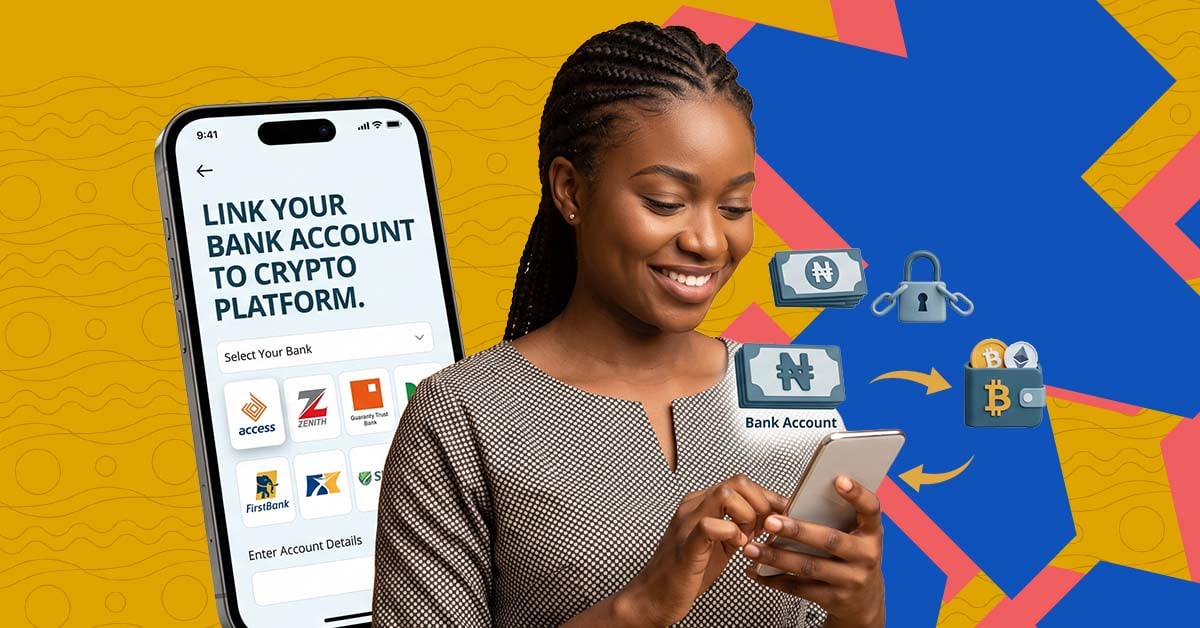
If you already hold crypto on an exchange and want to move it to self-custody, the process involves initiating a withdrawal from your exchange to your new wallet address. Always test with a small amount first. If you need to fund a purchase on an SEC-licensed exchange before moving assets to self-custody, our step-by-step guide to linking your Nigerian bank account to crypto platforms covers exactly which licensed platforms support smooth naira deposits in 2026.
Common Misconceptions
"My crypto is stored inside my wallet app." It is not. Your crypto lives on the blockchain. Your wallet stores the key that controls it. Deleting the app does not delete your crypto, but losing your seed phrase without a backup effectively does.
"Hardware wallets protect against all types of loss." A hardware wallet protects against remote hacking. Physical loss, fire damage, or forgetting the device PIN without a separate seed phrase backup can still result in permanent loss. Always keep seed phrase storage separate from the device itself.
"Keeping crypto on a licensed exchange is safe enough for long-term holding." Even SEC-licensed platforms carry platform risk. Best practice is to keep only what you need for active trading on an exchange and move longer-term holdings to a self-custody wallet. For a clear picture of which platforms currently meet the trust bar for day-to-day trading activity, our analysis of why certain Nigerian crypto platforms hold up better than others in 2026 breaks down the specific factors that separate reliable platforms from risky ones.
"MetaMask works for all blockchains." MetaMask is built for Ethereum and EVM-compatible networks. For Solana, Phantom Wallet is the correct choice. Sending assets to an incompatible wallet address can result in unrecoverable funds.
"You need technical expertise to use a non-custodial wallet." Modern wallets such as ZenGo and MetaMask are designed for everyday users. Setup takes under ten minutes. The main discipline required is seed phrase management, not technical skill.
nairaCompare Insight
For Nigerians new to crypto, the most common mistake is treating the exchange used for a first purchase as a permanent storage solution. An exchange wallet is appropriate while you are actively trading, but if you are accumulating digital assets as a hedge against naira depreciation, moving holdings above ₦200,000 into a non-custodial wallet gives you direct control that no platform restriction, access block, or exchange policy can override. ZenGo is a practical starting point for anyone who finds the seed phrase model intimidating; MetaMask suits those already interacting with Ethereum-based applications.
For more active users managing higher-volume holdings, the practical 2026 setup is a licensed Nigerian exchange as your naira entry and exit point, a hot wallet such as MetaMask for DeFi and token interactions, and a SafePal S1 or equivalent hardware wallet for anything held beyond six months. That three-layer approach balances liquidity, flexibility, and security in a way that a single custodial wallet cannot replicate, and it keeps your exposure to platform-level risk limited to only the portion you genuinely need accessible for trading.
Quick Recap
- A crypto wallet stores your private keys, not the coins themselves; your assets live on the blockchain.
- Hot wallets are internet-connected and convenient; cold wallets are offline and more secure for long-term storage.
- Custodial wallets are managed by the exchange; non-custodial wallets give you direct, independent key ownership.
- Your seed phrase is your ultimate recovery tool; back it up offline and treat it with the same care as your bank PIN.
FAQs
What is the safest type of crypto wallet for Nigerians?
For long-term holdings, a hardware crypto wallet such as SafePal S1 or Ledger offers the strongest protection, since private keys are stored entirely offline. For everyday use, a reputable non-custodial hot wallet with a securely stored seed phrase and biometric access provides a strong balance of security and convenience.
Is MetaMask available in Nigeria?
Yes. MetaMask is available as a browser extension and mobile app to users in Nigeria and is free to use. It supports Ethereum and all EVM-compatible blockchains. As a non-custodial wallet, you are fully responsible for securing your own seed phrase.
Can I use Phantom Wallet for non-Solana assets?
Phantom now supports Bitcoin and Ethereum alongside Solana, making it more versatile than its original design. If Ethereum and EVM network interaction is your primary activity, MetaMask remains the more widely supported option for that ecosystem.
What happens if I lose my phone with my crypto wallet on it?
Losing your phone does not mean losing your crypto, provided you have your seed phrase securely backed up. Install the same wallet application on a new device, select "Import wallet," and enter your seed phrase to restore full access.
Is Kraken a wallet or an exchange?
Kraken is primarily a cryptocurrency exchange. Like all exchanges, it provides a custodial wallet for each account holder. Holding crypto on Kraken means the platform controls your private keys on your behalf, not you directly. Kraken is internationally regulated but does not hold an SEC Nigeria licence, which limits naira on-ramp and off-ramp functionality for Nigerian users.
How much does a SafePal crypto wallet cost in Nigeria?
The SafePal S1 is available for approximately $50, equivalent to roughly ₦75,000 to ₦85,000 at current exchange rates, depending on the retailer and import route. It is the most cost-accessible hardware wallet option for most Nigerian users.
Conclusion
Choosing the right crypto wallet is one of the most consequential decisions a Nigerian crypto user can make. Whether the right fit is a custodial exchange wallet for active trading, a non-custodial hot wallet such as MetaMask or ZenGo for DeFi and day-to-day flexibility, or a hardware crypto wallet such as SafePal for long-term storage, the underlying principle stays the same: understand who controls your private keys and protect that access accordingly.
Our crypto comparison tools on nairaCompare can help you find the right exchange, virtual card, or product to complement the wallet setup that works for you, whether you are just getting started or looking to upgrade the way you manage your digital assets.

Noella Lepdung
Noëlla Lepdung is a writer who makes magic with all sorts of content, helping businesses find their voice and meet their ambitions with cutting-edge but human-first advertising. Her portfolio features brands such as Budweiser, The Coca-Cola Company, Nivea, Leadway Group, Honeywell Foods, Monieworx, Kimberly-Clark, and WAMCO.


Other related articles
.png?width=352&name=Crypto%20Wallets%20in%20Nigeria%20Custodial%20vs%20Non-Custodial%20Explained%20(1).png)
.png?width=352&name=blog%20header%20(10).png)
.png?width=352&name=quidax-Blog-anouncement%20(1).png)