




.png?width=40&height=40&name=Rectangle%202052%20(2).png)
.png?width=40&height=40&name=Rectangle%202052%20(1).png)







.jpg?width=1200&height=628&name=Your%20Complete%20Guide%20to%20Comparing%20Health%20Insurance%20Plans%20for%20Businesses%20in%20Nigeria%20(2026%20Edition).jpg)
.png?width=1266&height=427&name=blog%20header%20(27).png)
.webp?width=1266&height=427&name=blog%20header%20(38).webp)
%20(1).jpg?width=1200&height=628&name=Complete%20Guide_%20Sending%20Money%20from%20UK%20to%20Nigeria%20(2026)%20(1).jpg)


.webp?width=1200&height=628&name=Health%20Insurance%20Cost%20Report%20(2026).webp)

.png?width=1266&height=427&name=blog%20header%20(19).png)
.png?width=1266&height=427&name=blog%20header%20(30).png)

Author Noella Lepdung
Introduction
Nigerian women run an estimated 41% of micro, small, and medium enterprises in the country, yet they receive a far smaller share of formal business credit. This is not a soft statistic. It translates directly into businesses that stall at the trading-stall stage, expansion plans that wait years longer than they should, and entrepreneurs paying punitive informal-lender rates because formal lenders did not assess them fairly.
This guide walks through every meaningful loan option available to women-led businesses in Nigeria in 2026: commercial bank SME facilities, microfinance bank products, government-backed institutions, AFAWA-aligned women-focused programmes, regulated digital lenders, and cooperative lending. It is not a ranking of brands. It is a working map of the financing landscape, with honest assessments of cost, eligibility, and which lender fits which type of business.
Table of Contents
- Why This Guide Matters for Nigerian Women in Business in 2026
- The Lending Landscape at a Glance
- Understanding the Financing Context Unique to Women-Led Businesses
- Regulated Digital Lenders
- Women's Cooperatives and Esusu-Based Credit
- Loan Options Comparison Table
- The Real Cost of Borrowing: What to Calculate
- How to Apply: A Step-by-Step Guide
- Critical Analysis: Benefits and Risks
- Decision Framework: Which Loan Fits Which Business
- Regulatory Framework
- Real-Life Scenarios
- nairaCompare Insight
- FAQs
- Related Resources
- Conclusion
Why This Guide Matters for Nigerian Women in Business in 2026
Three conditions make 2026 a meaningfully different year for women-led business borrowing in Nigeria.
First, the CBN Monetary Policy Rate should be referenced as “current elevated double-digit rate as at latest CBN policy window” and must be updated from the most recent MPC communique before publishing. down from 27.5% but still elevated. This means commercial bank lending rates remain high, but moderating, and competition between digital lenders and traditional banks has tightened pricing for borrowers who can present clean documentation.
Second, the FCCPC Consumer Lending Regulations should be described as “ongoing enforcement strengthening digital lending compliance, with phased removal of unlicensed operators continuing into 2026 from the market. The lenders still standing are, on the whole, more accountable on data privacy, recovery practices, and disclosure. This matters disproportionately for women, who have historically been targets of the most aggressive recovery harassment.
Third, AFAWA (Affirmative Finance Action for Women in Africa, an African Development Bank initiative) has accelerated partnerships with Nigerian commercial and development banks, channelling concessional lines specifically into female-led SMEs. The result is more women-priced facilities at participating banks than at any prior point.
The opportunity is real. The discipline required to access it well, without falling into a debt trap, is what this guide is built around.
The Lending Landscape at a Glance
Loans for women in business in Nigeria sit on a spectrum from informal community lending (esusu, ajo, women's cooperatives) at the smallest end, through microfinance banks, regulated digital lenders, and commercial banks, up to development finance institutions (DBN, BOI) and DFI-channelled lines (AFAWA partner banks) at the largest end.
The choice between them is not about prestige. It is about three variables: how much you need, how quickly you need it, and what documentation and collateral you can produce. A trader needing ₦150,000 for stock turnover this week is not the same borrower as a fashion-house owner planning a ₦25 million expansion across two cities. Both deserve a sensible answer.

Understanding the Financing Context Unique to Women-Led Businesses
Three structural realities shape the way women experience formal credit in Nigeria.
Many women run their businesses without owning property in their own name, which excludes them from collateralised lending products that assume real estate as security. Cash-flow-based and group-guarantee lending models work around this, but they remain less common at commercial banks than at microfinance banks and digital lenders.
Second, seasonal cash flow is more common in the categories women dominate (fashion, food, beauty, retail, education) than the steady salaried cash flow that most loan structures assume. A repayment schedule that does not flex around school-fee season or Sallah trading peaks is a default waiting to happen.
Third, time poverty is a real constraint. A woman running a business while managing household responsibilities does not have a free week to assemble a 14-document loan file. The lenders who win her business are those whose application, disbursement, and repayment processes she can run from her phone in the gaps of her day.
None of these are barriers to borrowing well. They are filters for choosing the right lender.
Commercial Bank SME Loans
The major Nigerian commercial banks (Access, Zenith, GTBank, FirstBank, UBA, Stanbic IBTC, Wema, FCMB, and others) offer dedicated SME loan products with structured tenors and competitive pricing for borrowers who meet documentation requirements.
Typical structure:
- Loan size: ₦500,000 to ₦100 million, subject to bank assessment
- Tenor: 12 to 60 months
- Pricing: anchored to MPR plus a margin, currently translating to roughly 25–32% per annum for unsecured SME facilities, lower for collateralised lending
- Eligibility: registered business (CAC), 6–24 months of bank statements, BVN, two guarantors typical
- Common products: working capital loans, asset-finance loans, invoice-discounting facilities, overdraft lines
Women-priced lines: Several commercial banks operate women-focused desks or programmes (Access Women Banking, Stanbic IBTC's Blue Blossom, FCMB SheVentures and similar) with reduced documentation burdens, mentorship attached, and AFAWA-priced concessional rates for qualifying applicants.
Best for: Established businesses with at least 12 months of formal banking history, clean repayment record, and the documentation discipline to satisfy a credit committee. Best fit for the ₦2 million-and-above ticket size.
Consideration: Decision timelines can run two to six weeks. Not appropriate for opportunity-driven funding needs that must close inside a fortnight.
Microfinance Bank Loans
CBN-licensed microfinance banks (MFBs) sit between informal and formal credit. They are designed precisely around the realities of small and informal businesses, which is why women hold a disproportionate share of MFB loan books.
Typical structure:
- Loan size: ₦50,000 to ₦5 million depending on MFB tier
- Tenor: 3 to 24 months, with weekly or monthly repayment schedules
- Pricing: monthly rates of 3–8% are common, equivalent to 36–96% annualised. Always convert quoted monthly rates to annual equivalents before comparing.
- Collateral: many MFB products use group guarantees, business stock, or post-dated cheques rather than property
- Disbursement speed: 24 hours to 7 days typical
Notable MFBs serving women's businesses: LAPO MFB (one of the largest, with a strong women-and-microenterprise focus), Accion MFB, AB Microfinance Bank, Mainstreet MFB, Baobab MFB, and Fina Trust MFB. Each has slightly different sweet spots.
Best for: Traders, food vendors, fashion entrepreneurs, salon owners, and small-scale producers needing ₦100,000 to ₦2 million for stock, equipment, or short-term working capital.
Consideration: Headline monthly rates can disguise high effective annual costs. Always calculate total naira repayable before signing, not just the headline percentage.
Development Bank of Nigeria (DBN)
DBN is a wholesale development finance institution. It does not lend directly to retail borrowers. Instead, it on-lends to commercial banks, microfinance banks, and other Participating Financial Institutions (PFIs), who then deploy the funds at concessional rates to SMEs.
Typical structure (via PFI):
- Loan size: from ₦500,000 up to several hundred million depending on the PFI
- Tenor: up to 10 years for capital expenditure, with moratorium options for project finance
- Pricing: PFIs apply a margin over the DBN base rate, but DBN lines are typically priced below comparable on-balance-sheet bank lines
- Eligibility: same documentation as the PFI, plus DBN-eligibility criteria the PFI applies on its behalf
How to access: Walk into the SME desk of a DBN PFI (most major commercial banks and several MFBs) and specifically request a DBN-funded facility. If the relationship officer has not heard of it, escalate or move to a different PFI.
Best for: Capital expenditure projects (factory equipment, premises, vehicle fleets), expansion finance, and longer-tenor working capital where the borrower wants a multi-year repayment runway.
Bank of Industry (BOI)
BOI is the federal government's industrial development bank. Its mandate is broader than DBN, with direct lending to certain segments and several branded programmes that have included women-focused windows.
Typical structure:
- Loan size: ₦5 million to ₦2 billion for direct facilities
- Tenor: up to 7 years, with moratoriums available
- Pricing: among the most competitive in the formal market, usually 9–14% per annum on direct facilities, subject to BOI's published rates at time of application
- Sectors: manufacturing, agro-processing, creative industries, technology, and services
BOI also operates BOI-MSME on-lending lines through partner MFBs, opening lower ticket sizes (from around ₦500,000) to micro and small enterprises.
Application reality: BOI processes are documentation-heavy, and decision timelines can run several months. The reward is genuinely affordable financing once approved.
Best for: Manufacturing or value-adding businesses with audited or audit-ready accounts, demonstrable export, employment, or import-substitution potential, and the patience to navigate a development bank approval cycle.
Status note: Specific BOI programme names and women-focused windows are renewed and rebranded periodically. Verify current programme availability at boi.ng before relying on any specific window.
NIRSAL Microfinance Bank
NIRSAL MFB is the CBN-licensed microfinance arm associated with the Nigeria Incentive-Based Risk Sharing System for Agricultural Lending. It administered several federal intervention windows during 2020–2023, including the AGSMEIS scheme. Several of those windows have closed, opened in batches, or been replaced with new structures.
Use NIRSAL MFB if: A current intervention window applies to your sector, or you need a relatively low-cost MFB facility outside intervention windows. Always confirm window status at nmfb.com.ng before assuming any specific scheme is active.
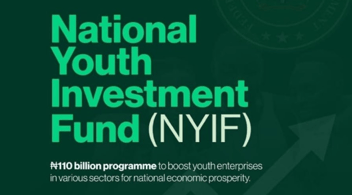
Important context for 2026: The Nigeria Youth Investment Fund (NYIF), often grouped with NIRSAL-administered programmes in older articles, is no longer accepting new applications. Do not assume legacy programmes are still open. Verify current availability before applying.
AFAWA-Aligned Women-Focused Programmes
AFAWA is the African Development Bank's flagship gender-finance initiative, launched to close the estimated $42 billion financing gap for African women entrepreneurs. In Nigeria, AFAWA operates primarily through partnerships with commercial and microfinance banks, providing risk-sharing guarantees and concessional liquidity that allow partner banks to lend to women-led SMEs at preferential terms.
What this looks like in practice:
- Reduced or waived collateral requirements for qualifying women-led businesses
- Lower interest pricing than the bank's standard SME rate
- Capacity-building components (financial literacy, business mentorship, networking)
- Application priority for businesses where 51%+ ownership, leadership, or beneficial control is female
Partner banks vary year to year. Ask any commercial bank's SME or women-banking desk directly: "Do you have an AFAWA-supported facility I can apply for?" If they do, request a written term sheet and compare against their standard SME pricing before committing.
Best for: Established or scaling women-led businesses (registered, with trading history) seeking ₦2 million and above, where concessional pricing meaningfully reduces the cost of capital.
Regulated Digital Lenders
Digital lenders operate entirely through mobile apps and disburse in minutes to hours. The category was reshaped in 2025–2026 by the FCCPC's enforcement of the DEON Consumer Lending Regulations 2025, which set minimum standards for licensing, data protection, and recovery practices. Compliance was required by 5 January 2026.
Use only FCCPC-registered lenders. The full list is published on the FCCPC website (fccpc.gov.ng). Notable regulated digital lenders that have served small business borrowers responsibly include FairMoney MFB, Carbon, Branch (operating under its CBN-licensed structure), PalmPay (Flexi credit line), and Renmoney. Several have moved toward longer-tenor business products specifically.
Typical structure:
- Loan size: ₦5,000 to ₦5 million depending on the lender's risk grade for the borrower
- Tenor: 7 days to 24 months
- Pricing: varies widely. Daily and weekly rates are common at the small-ticket end. Where a lender quotes a daily rate (for example 0.5% per day), multiply by 30 for the monthly equivalent before comparing to alternatives. Headline daily rates often translate into 60–200%+ annualised on the smallest tickets.
Best for: Bridging short-term cash-flow gaps (one supplier payment, one stock cycle) where speed of access genuinely justifies the cost.
Critical warnings:
Women's Cooperatives and Esusu-Based Credit
Cooperative and rotating-savings-and-credit structures (esusu, ajo, adashe) remain the bedrock of finance for many Nigerian women in business, particularly informal traders. Modern formal cooperatives, registered under state cooperative registries, lend at notably lower rates than digital lenders and microfinance banks because they are funded by member contributions rather than commercial liquidity.
Typical structure:
- Loan size: ₦20,000 to ₦2 million depending on the cooperative
- Tenor: 6 to 36 months
- Pricing: 5–15% per annum is common in well-run cooperatives, far below MFB pricing
- Collateral: cooperative savings balance plus group guarantees
Best for: Traders and small business operators with stable community ties who can commit to monthly contributions and group meetings. Particularly powerful for the ₦50,000–₦500,000 ticket size where MFB and digital lender pricing is at its most punitive.
Consideration: Verify the cooperative is formally registered with the relevant state cooperative office. Avoid unregistered "thrift schemes" promising outsized returns. Several have collapsed publicly in recent years, taking members' contributions with them.
Loan Options Comparison Table
All figures are indicative as at early 2026. Verify current rates with each provider before committing.
|
Loan source |
Typical size |
Typical pricing |
Speed |
Collateral profile |
|
Commercial bank SME |
₦500k–₦100M |
25–32% p.a. |
2–6 weeks |
Often required; AFAWA windows reduce |
|
Microfinance bank |
₦50k–₦5M |
36–96% p.a. equivalent |
1–7 days |
Group/stock/post-dated cheques |
|
DBN (via PFI) |
₦500k–₦500M+ |
Concessional, varies |
4–8 weeks |
As per PFI |
|
BOI |
₦5M–₦2B |
9–14% p.a. |
2–6 months |
Required for direct facilities |
|
AFAWA partner bank |
₦2M+ |
Below standard SME |
3–8 weeks |
Reduced or waived |
|
Regulated digital lender |
₦5k–₦5M |
60–200%+ annualised at small ticket |
Minutes to hours |
None to minimal |
|
Cooperative |
₦20k–₦2M |
5–15% p.a. |
1–4 weeks |
Savings + group guarantee |
The Real Cost of Borrowing: What to Calculate
Headline rates mislead more often than they inform. Three numbers tell you the truth about a loan offer.
Total naira repayable. Add every payment you will make over the life of the loan. Subtract the disbursement amount. The difference is the actual cost of capital in dirty, undeniable cash terms.
Effective annual rate. Convert any quoted daily, weekly, or monthly rate into an annual equivalent. A 5% monthly rate is not 60% annual. With monthly compounding it is approximately 79.6%. This single calculation, done before signing, prevents most debt traps.
Fees and charges beyond interest. Origination fees, management fees, insurance fees, statutory deductions, and early-repayment penalties all add to the true cost. A loan with a 20% interest rate and a 10% upfront origination fee on a 12-month tenor costs more than a loan with a 28% interest rate and no origination fee. Always insist on a written breakdown.
If a lender resists giving you a written total-naira-repayable figure before disbursement, walk away. A lender that will not state the total cost is one you cannot afford to do business with.
How to Apply: A Step-by-Step Guide
- Define the loan purpose precisely. "Stock for the December trading season" is fundable. "Business expansion" is not. Lenders price risk based on clarity of purpose.
- Match the loan source to the purpose. Working capital for one stock cycle goes to MFBs, cooperatives, or digital lenders. Equipment and premises go to BOI, DBN-PFIs, or commercial banks.
- Assemble core documentation. CAC certificate, BVN, six months of business bank statements, two valid IDs, two guarantors with verifiable addresses, utility bill, and a one-page business summary covering revenue, costs, and how the loan will be repaid.
- Run a credit check on yourself first. Pull your CRC, CreditRegistry, or FirstCentral report before any lender does. Address any errors before they are used against you.
- Apply to two or three sources in parallel. Comparison only works if you have offers in hand. Avoid accepting the first offer simply because it arrived first.
- Read the offer letter line by line. Specifically: total repayable, repayment schedule, default consequences, prepayment terms, security clauses, and any cross-default with other facilities.
- Sign only after verifying. Pricing should match what was discussed. Tenor should match. Repayment account details should be the bank's official account. Phishing of women borrowers via WhatsApp impersonation is a documented pattern.
- Set up automated repayment. Standing orders or direct debit reduce missed-payment risk far more reliably than calendar reminders.
Critical Analysis: Benefits and Risks
Benefits
Access to formal credit, used well, is the most reliable accelerant for a business that has reached the limits of what its own retained cash flow can fund. For a woman business owner specifically, building a formal repayment record opens larger and cheaper credit downstream, breaking the cycle of being permanently confined to small, expensive informal-lender tickets.
Risks
Every loan that does not perform damages the borrower more than the lender. Three risks dominate.
The first is over-borrowing. Loans are easier to access than they are to repay. A loan facility sized to a borrower's hopes rather than to her demonstrable cash flow is a loss waiting to happen.
The second is concurrent borrowing. Stacking digital-lender facilities, MFB loans, and cooperative loans simultaneously is a near-certain path to default. Use one principal loan source per active business cycle.
The third is collateral and personal-guarantee exposure. Property or savings pledged as security can be lost. Personal guarantees can pursue the guarantor's personal assets after the business closes. Read every clause that begins "in the event of default."
Decision Framework: Which Loan Fits Which Business
If you need under ₦200,000 within a week: Cooperative, microfinance bank, or regulated digital lender, in that order of preference. Cooperatives are cheapest where you have membership.
If you need ₦200,000 to ₦2 million within a month: Microfinance bank with women-focused product, or commercial bank SME desk if you have 12+ months of formal banking history.
If you need ₦2 million to ₦20 million for a defined business purpose: Commercial bank SME desk with an explicit AFAWA-window enquiry. Compare against a DBN-PFI offer.
If you need ₦20 million and above for capital expenditure: Bank of Industry direct facility, or DBN-PFI on-lending through a partner commercial bank, depending on sector and tenor needs.
If you are an informal trader without formal documentation: A registered women's cooperative, followed by an MFB once a six-month savings record is established.
Regulatory Framework
Central Bank of Nigeria (CBN): Licenses and supervises commercial banks, microfinance banks, and payment service banks. Sets the MPR (currently 26.5% as at February 2026). Verify any deposit-taking lender's licence at cbn.gov.ng.
FCCPC (Federal Competition and Consumer Protection Commission): Enforces the Consumer Lending Regulations 2025 (DEON), with full compliance required from 5 January 2026. Maintains the official register of approved digital lenders. Receives complaints on abusive recovery practices.
Nigeria Data Protection Commission (NDPC): Regulates lender handling of personal data. Loan apps that scrape contacts, photos, or location without consent breach the Nigeria Data Protection Act 2023.
SMEDAN (Small and Medium Enterprises Development Agency of Nigeria): Maintains the National MSME Survey and supports business registration. Useful for formalisation steps that unlock formal credit.
Cooperative state registries: State-level registration governs formal cooperatives. Verify any cooperative's registration before depositing funds or borrowing.
Real-Life Scenarios
Scenario 1: Adaeze, 32, fashion retailer in Abuja, monthly revenue ₦1,200,000
Adaeze operates a registered fashion business with 14 months of bank statements and a small full-time team. She needs ₦5 million to fund pre-season fabric purchases for Detty December and a Sallah-period collection. She approaches her primary commercial bank's SME desk and specifically asks whether an AFAWA-supported window is available for women-led businesses. The bank offers her a 12-month working-capital loan at 22% per annum under that window, with reduced collateral requirements and a three-month moratorium on principal. She compares against a microfinance bank offer (₦5M at 5% monthly equivalent to roughly 80% annualised) and chooses the commercial bank facility.
Scenario 2: Amina, 38, food trader in Kano, monthly revenue ₦280,000
Amina sells foodstuff at a major market and has no formal CAC registration. She needs ₦150,000 to expand her stock ahead of an upcoming festival period. She joins a registered women's cooperative she has known through her market association for two years and, after three months of regular savings, qualifies for a ₦150,000 cooperative loan at 10% per annum over 12 months. Her total repayment is approximately ₦165,000, compared with the ₦210,000 she would have repaid on the same amount through a digital lender at standard small-ticket pricing.
Scenario 3: Funke, 41, beauty-products manufacturer in Lagos, monthly revenue ₦4,500,000
Funke wants to fund a ₦35 million automated bottling line. She approaches BOI directly because the asset is in BOI's manufacturing-finance sweet spot. The application is documentation-heavy and takes four months, but the loan is ultimately approved at 12% per annum over 5 years with a 9-month moratorium. She also opens a working-capital line at her commercial bank under an AFAWA window for short-cycle raw-material purchases, keeping the BOI facility ringfenced for the equipment investment.
nairaCompare Insight
For the formal SME owner, our 30–42 year-old business owner in Abuja or Ibadan earning ₦500,000 to ₦2,000,000 monthly: the most expensive mistake we see is taking the first commercial bank offer without explicitly asking about an AFAWA-supported or women-banking window. Pricing differences of 4–8 percentage points are routine between the standard SME rate and the women-priced facility at the same bank. On a ₦10 million, three-year facility, that is the difference between ₦1.2 million and ₦2.4 million in interest paid. Use our loan comparison tool to benchmark offers across at least three banks before signing and request the AFAWA window by name.
For the informal trader, our 25–45 year-old market-based entrepreneur earning ₦50,000 to ₦200,000 monthly: cooperatives are almost always a cheaper starting point than digital lenders for tickets between ₦50,000 and ₦500,000, even after factoring in the time cost of regular meetings. The discipline of three to six months of documented savings, before borrowing, also builds the deposit history that unlocks larger MFB facilities later. Start small, repay cleanly, and let the credit profile compound. Our microfinance and cooperative comparison guides are designed precisely around your cash-flow pattern.
FAQs
Can I get a business loan in Nigeria without collateral?
Yes. Microfinance banks regulated digital lenders, women's cooperatives, and several commercial-bank women-banking windows lend without real-estate collateral, using cash flow, group guarantees, business stock, or AFAWA risk-sharing instead.
Are there government loans specifically for women in business in Nigeria in 2026?
Several government and DFI-supported channels prioritise women borrowers, including BOI's women-focused windows, AFAWA-supported lines through partner commercial and microfinance banks, and selected MFB intervention products. Programme names and availability change. Verify current offerings at boi.ng, the partner bank's website, and at fccpc.gov.ng before applying.
Is the NYIF still available in 2026?
The Nigeria Youth Investment Fund is no longer accepting new applications. Direct your application energy elsewhere rather than chasing closed windows.
What credit score do I need for a Nigerian SME loan?
Nigeria's three credit bureaux (CRC, CreditRegistry, FirstCentral) operate different scales rather than a single FICO-equivalent. Most commercial banks require a clean repayment record across at least the past 12–24 months and no active default. Pull your own report before applying.
How can I avoid the predatory loan apps that have damaged so many borrowers?
Use only FCCPC-registered digital lenders. Never grant blanket contact-list access. Never stack multiple digital loans. Read the privacy policy before downloading. If in doubt, do not download.
Can I borrow in dollars to fund my import business?
Direct retail dollar lending is restricted in Nigeria. Most importers use either domiciliary-funded LCs through their commercial bank, BOI's import-substitution facilities, or naira loans converted at the prevailing CBN-window rate. Building a formal banking relationship is the gateway to better FX pricing.
Are women-only cooperatives legally allowed to lend?
Yes, when registered with the relevant state cooperative office under cooperative-society legislation. Verify registration before joining or depositing funds.
How long should my first business loan be?
Match tenor to use of funds. Working capital for one stock cycle should be 3–12 months. Equipment and premises should be 24–60 months. Tenor longer than the productive life of the asset is a structural error, not a feature.
What happens if I default on a Nigerian business loan?
Consequences vary by lender. Commercial banks can apply Global Standing Instruction (GSI) to recover from any account in your name across the banking system. MFBs and cooperatives pursue guarantors. Digital lenders may report to credit bureaux, damaging access to future credit for years. Always communicate early with the lender if you anticipate trouble.
Is BVN required for every business loan?
For every regulated lender in Nigeria, yes. BVN is the backbone of borrower identification across the formal financial system.
Can I use my pension or RSA balance to secure a business loan?
Under PenCom regulations, RSA holders can use a percentage of their balance as equity contribution for residential mortgages, subject to specific guidelines. This is not a general business-loan facility. Check current rules at pencom.gov.ng.
What is the cheapest legitimate loan option for a small woman-owned business?
For small tickets (₦50,000–₦500,000), a registered women's cooperative is typically the cheapest formal option available. For larger tickets where eligibility is met, BOI direct facilities and AFAWA-window commercial bank lines are the most competitively priced.
Conclusion
The financing landscape for Nigerian women in business in 2026 is more diverse, more regulated, and more women-aware than at any prior point. AFAWA-aligned commercial bank windows, BOI's continued women-priced facilities, a cleaned-up digital-lender market, and a strong cooperative tradition together mean that almost every legitimate business need has a sensible legitimate financing source. The work is no longer to find a loan. It is to choose the right loan, at the right price, for the right purpose, with documentation that lets you say yes confidently.
If you are weighing a borrowing decision today, our loan comparison tool lets you benchmark offers across commercial banks, microfinance banks, and regulated digital lenders in one place, with transparent pricing and a clear view of total cost. Borrow for what your business genuinely needs, at the cheapest price your eligibility supports, and let each clean repayment open the door to the next, larger, cheaper facility.
Borrow responsibly. Failure to repay can affect your credit score and result in additional charges. This article is for informational purposes only and does not constitute financial advice. Verify all rates, programme availability, and eligibility criteria directly with providers before applying.

Noella Lepdung
Noëlla Lepdung is a writer who makes magic with all sorts of content, helping businesses find their voice and meet their ambitions with cutting-edge but human-first advertising. Her portfolio features brands such as Budweiser, The Coca-Cola Company, Nivea, Leadway Group, Honeywell Foods, Monieworx, Kimberly-Clark, and WAMCO.


Other related articles



.png?width=352&name=blog%20header%20(7).png)