




.png?width=40&height=40&name=Rectangle%202052%20(2).png)
.png?width=40&height=40&name=Rectangle%202052%20(1).png)



-3.jpg?width=1200&height=628&name=Top%2010%20Health%20Insurance%20Plans%20in%20Nigeria%20in%202026%20(Affordable%20%26%20Reliable%20Options)-3.jpg)
%202.jpg?width=1200&height=628&name=Top%2010%20Health%20Insurance%20Plans%20in%20Nigeria%20in%202026%20(Affordable%20%26%20Reliable%20Options)%202.jpg)

.jpg?width=1200&height=628&name=Best%20Car%20Loans%20in%20Nigeria%20(2026%20Ranking).jpg)



.jpg?width=1200&height=628&name=Your%20Complete%20Guide%20to%20Comparing%20Health%20Insurance%20Plans%20for%20Businesses%20in%20Nigeria%20(2026%20Edition).jpg)
.png?width=1266&height=427&name=blog%20header%20(27).png)
.webp?width=1266&height=427&name=blog%20header%20(38).webp)
%20(1).jpg?width=1200&height=628&name=Complete%20Guide_%20Sending%20Money%20from%20UK%20to%20Nigeria%20(2026)%20(1).jpg)


.png?width=1266&height=427&name=blog%20header%20(19).png)
.png?width=1266&height=427&name=blog%20header%20(30).png)
.webp?width=1200&height=628&name=Health%20Insurance%20Cost%20Report%20(2026).webp)

.webp)
Author Noella Lepdung
Introduction
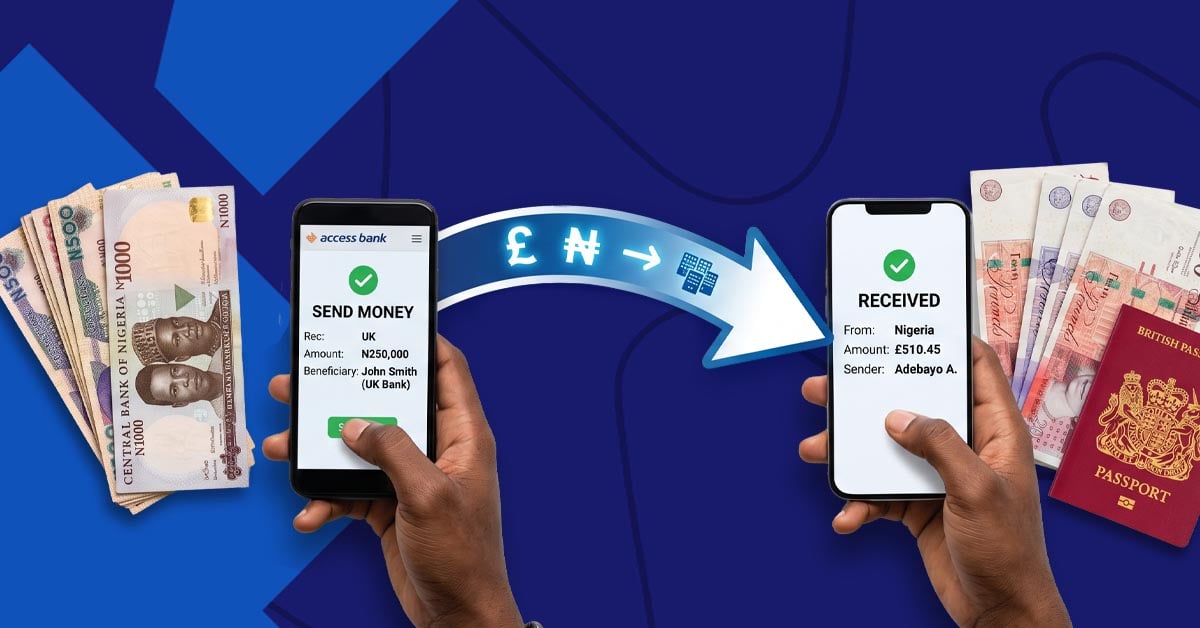
Sending money from the UK to Nigeria does not have to be expensive. With the right transfer platform, you can avoid bank markups of up to 6% and save thousands of naira on every transaction.
This 2026 guide breaks down the cheapest, fastest, and most reliable options for sending pounds to naira, backed by current exchange data and transparent fee comparisons. Whether you are sending money home monthly, covering school fees, or supporting family, the platform you choose matters more than most people realise.
Table of Contents
- What to Know About GBP/NGN Rates in 2026
- What Traditional UK Banks Actually Charge
- The Cheapest Providers for UK to Nigeria Transfers in 2026
- How to Choose the Right Provider for You
- Tips to Get the Most Naira for Your Pounds
- nairaCompare Insight
- FAQs
- Related Resources
- Conclusion

What to Know About GBP/NGN Rates in 2026
The GBP/NGN exchange rate has shifted significantly over the past 12 months. In October 2025, the mid-market rate sat between ₦1,942 and ₦1,957 per pound. As at early 2026, the GBP/NGN mid-market rate has fluctuated within a broad range depending on market conditions and liquidity, reflecting fluctuations in the naira exchange rate driven by FX liquidity conditions, monetary policy adjustments, and changes in supply and demand dynamics. The gap between official and parallel market rates has narrowed compared to previous years but remains variable.
This matters for UK senders because the naira your recipient receives per pound is lower than it was a year ago. The cost of choosing a poor provider, one that applies a 3% to 6% markup on top of the mid-market rate, is therefore more visible than ever. On a £1,000 transfer at today's mid-market rate, a 4% total cost difference between a bank and a specialist platform can translate to tens of thousands of naira less in your recipient's account.
Always compare your provider's offered rate against the mid-market rate on our nairaCompare comparison tool before you send.
What Traditional UK Banks Actually Charge
Most UK high street banks, including Barclays, HSBC, Lloyds, and NatWest, offer international transfers but typically apply exchange rate markups that can range from around 2% to over 5%, depending on the bank and transfer method on the mid-market exchange rate, on top of fixed transfer fees of £15 to £25 per transaction. On a £1,000 transfer, the combined cost can amount to £45 to £85 more than using a specialist digital transfer provider. Over 12 monthly transfers, this is a meaningful sum that ends up with the bank rather than your family.
The solution is straightforward: use a specialist international money transfer platform that either offers zero fees with a competitive rate or charges a small transparent fee at the mid-market rate.
The Cheapest IMTO Providers for UK to Nigeria Transfers in 2026
Africhange
Best for: Zero fees and instant transfers
Africhange continues to lead for zero-fee transfers from the UK to Nigeria, offering competitive exchange rates and instant or near-instant delivery to Nigerian bank accounts. The platform has become one of the most popular UK-to-Nigeria transfer apps for its combination of speed, transparency, and fee-free structure. Rather than charging a transfer fee, Africhange builds a small margin into the exchange rate, which remains competitive against most rivals. For senders who want maximum simplicity, paying nothing upfront and seeing the recipient amount clearly before confirming, Africhange is the natural starting point.
Key details:
- Transfer fees: Zero
- Delivery speed: Instant to a few hours
- Delivery method: Nigerian bank accounts
- Regulation: FCA-regulated
Remitly
Best for: Overall reliability and frequency of best-rate performance
Remitly is frequently among the most competitive providers across different transfer amounts, making it the most consistently competitive option across a wide range of transfer amounts. The platform offers two transfer modes: an Express option that delivers within minutes at a slightly higher fee, and an Economy option that takes one to five business days at a lower cost. New users benefit from promotional exchange rates and reduced fees on their first transfer. For anyone sending regularly, Remitly's combination of competitive pricing, reliable delivery, and strong app experience makes it the most versatile all-round choice.
Key details:
- Transfer fees: From £0 (Economy) to a small flat fee (Express)
- Delivery speed: Minutes (Express) to 1 to 5 business days (Economy)
- Delivery method: Bank accounts, mobile wallets, cash pickup
- Regulation: FCA-regulated
Sendwave
Best for: Speed with zero fees
Sendwave offers zero transfer fees and one of the most competitive GBP to NGN exchange rates in the market, with delivery typically within minutes directly to Nigerian bank accounts. It is particularly well suited to smaller, frequent transfers where fixed fees would disproportionately eat into the amount sent. The app is clean and simple to use, with no hidden costs and real-time delivery confirmation. For senders who prioritise speed and simplicity above everything else, Sendwave is consistently one of the top performers.
Key details:
- Transfer fees: Zero
- Delivery speed: Minutes
- Delivery method: Nigerian bank accounts and mobile wallets
- Regulation: FCA-regulated

Wise (formerly TransferWise)
Best for: Mid-market rate transparency
Wise charges a small transparent fee, typically a fixed amount plus a percentage of the transfer, but applies the mid-market rate with no exchange rate markup. That means the rate you see on Google is the rate you get. For larger transfers where the exchange rate margin matters more than the fixed fee, Wise frequently offers the best total value. It also offers borderless multi-currency accounts, making it useful for Nigerian professionals in the UK who receive payments in sterling and want to manage multiple currencies from one platform. Wise scores particularly highly in comparisons of providers offering both cost efficiency and feature breadth.
Key details:
- Transfer fees: From approximately £3 to £5 fixed plus 0.4% to 0.6% variable
- Delivery speed: A few hours to one business day
- Delivery method: Nigerian bank accounts
- Regulation: FCA-regulated
WorldRemit
Best for: Delivery flexibility including cash pickup
WorldRemit offers bank deposits, mobile wallet delivery to OPay, PalmPay, and Kuda, and cash pickup via its agent network in Nigeria. That breadth of delivery options makes it the most versatile choice for recipients who do not have a standard bank account or who prefer cash collection. Transfer fees are low, and the exchange rate is competitive, though not always at the very top of the market. For senders whose recipients need cash pickup or mobile wallet credit rather than a bank transfer, WorldRemit is the default recommendation.
Key details:
- Transfer fees: From £0.99
- Delivery speed: Minutes to a few hours
- Delivery method: Bank accounts, mobile wallets, cash pickup
- Regulation: FCA-regulated
Lemfi (formerly LemFi)
Best for: Nigerian diaspora-specific features
Lemfi has built a strong following among the Nigerian diaspora in the UK by combining competitive transfer rates with features tailored specifically to the Nigeria corridor. The platform allows users to hold GBP and NGN balances, send directly to Nigerian bank accounts, and access the nairaCompare comparison tool integration for rate checking. Transfer fees are low, and delivery is typically fast. For Nigerians in the UK who want a platform that understands the specific needs of the corridor rather than treating it as one of dozens of destinations, Lemfi is a natural fit.
Key details:
- Transfer fees: Low, varies by amount
- Delivery speed: Minutes to a few hours
- Delivery method: Nigerian bank accounts
- Regulation: FCA-regulated
TransferGo
Best for: Very fast transfers at low cost
TransferGo often offers zero-fee transfers depending on the transfer type and promotion, with transfers arriving within minutes, depending on the payment method and receiving bank, placing it among the fastest options in the market. Founded in 2012 and now serving over 8 million customers globally, TransferGo operates in over 160 countries and uses a digital account-to-account model that bypasses traditional banking intermediaries to cut costs. The platform is regulated by the FCA and HMRC in the UK. For senders who need money to arrive urgently and want to pay as little as possible, TransferGo's zero-fee instant transfer model is hard to beat.
Key details:
- Transfer fees: Zero
- Delivery speed: Two to three minutes
- Delivery method: Nigerian bank accounts
- Regulation: FCA and HMRC regulated
Western Union
Best for: Cash pickup and recipients without bank accounts
Western Union remains the most reliable cash pickup option for the UK to Nigeria corridor and is sometimes competitive for certain transfer types, particularly cash pickup. With a nationwide network of agent locations across Nigeria, it is the go-to choice when the recipient does not have a bank account or needs physical cash access. Online transfers via the Western Union app or website are significantly cheaper than branch-based transfers. Bank transfer fees are typically higher than specialist digital providers, but the cash pickup network has no meaningful alternative for recipients in areas with limited banking access.
Key details:
- Transfer fees: Varies by delivery method (lower online, higher in branch)
- Delivery speed: Minutes (cash pickup) to 1 to 2 business days (bank deposit)
- Delivery method: Cash pickup, bank accounts, mobile wallets
- Regulation: FCA-regulated
Nigerian Banks
Nigerian banks including GTBank, Access Bank, Zenith Bank, UBA, and First Bank all accept international inbound transfers into domiciliary accounts held in pounds, dollars, or euros. The sender initiates a SWIFT wire from their UK bank using the recipient's account number and the Nigerian bank's SWIFT/BIC code. Funds typically arrive in two to five business days. GTBank has a physical London branch where UK-based Nigerians can open Non-Resident Nigerian accounts in person, making it the most accessible option for the diaspora. Zenith Bank participates in the CBN Naira4Dollar scheme, which pays an additional ₦5 per dollar received through licensed channels.
Banks are best suited for large, infrequent transfers where an institutional paper trail matters, or where the recipient wants to hold foreign currency in a domiciliary account rather than convert immediately. For regular smaller remittances, the fees and processing times make IMTOs a more practical choice.
How to access the cheapest option:
- Compare your UK bank's SWIFT fee against the recipient's Nigerian bank's incoming transfer charge before sending
- Ask the Nigerian bank whether their domiciliary account accepts GBP directly, to avoid a double conversion
- Use the recipient's domiciliary account rather than a naira account to avoid forced conversion at the bank's rate
- Consider timing large transfers around periods of naira stability to maximise the conversion value
Bureau de Change (BDC)
CBN-licensed BDCs have become a remittance channel for diaspora Nigerians who want to negotiate naira conversion rates outside what banks post. The process involves wiring foreign currency from your UK account to a BDC's domiciliary account at a Nigerian bank. Once the transfer is confirmed, typically within one to three business days, the BDC converts the funds at an agreed rate and pays your recipient by bank transfer or cash. The CBN overhauled BDC regulations in 2024, reducing licensed operators to 82 as of November 2025, and restored their access to the official forex market in early 2026, allowing each to purchase up to $150,000 weekly at official rates.
BDCs are most relevant for larger transfers where negotiating a rate is worthwhile. For regular smaller remittances, the extra steps involved rarely justify the effort over a well-rated IMTO.
How to access the cheapest option:
- Verify the operator's CBN licence before any transaction at cbn.gov.ng or by requesting the licence number directly
- Confirm the BDC holds a domiciliary account with a reputable Nigerian bank (GTBank, Access, Zenith, UBA)
- Negotiate the conversion rate upfront and get it confirmed in writing or via chat before wiring
- Insist on payment to your recipient's bank account rather than cash, for traceability
Crypto
Stablecoins such as USDT (Tether) and USDC have become a practical remittance channel for digitally comfortable senders. The process involves buying a stablecoin on a licensed UK exchange, sending it to a wallet address held by the recipient in Nigeria, and the recipient converting it to naira on a local exchange or P2P platform. USDT on the Tron (TRC-20) network is the most widely used option because fees are a fraction of a dollar and TRC-20 is broadly supported by Nigerian exchanges. Nigeria ranked second globally in crypto transaction volume in Q1 2026, and from January 2026, the Nigeria Tax Act 2025 classifies crypto gains as taxable income, so recipients converting stablecoins to naira are subject to tax reporting.

Crypto suits senders already comfortable with digital wallets and recipients who want to hold dollar-equivalent savings. For straightforward monthly family support, an IMTO remains simpler and lower risk.
How to access the cheapest option:
- Use USDT on TRC-20, not ERC-20, which carries much higher gas fees
- Confirm which network your recipient's Nigerian exchange supports before sending — network mismatch results in permanent loss of funds
- Always send a small test amount before the full transfer
- Only use regulated exchanges on both ends; in Nigeria, look for SEC-licensed VASPs
Quick Comparison: All Methods at a Glance
|
Method |
Typical Cost |
Speed |
Best For |
Risk Level |
|
IMTOs |
0–3% |
Minutes to 24 hours |
Regular remittances of any size |
Low |
|
Nigerian Banks (SWIFT) |
£15–£25 fee + FX markup |
2–5 business days |
Large transfers; domiciliary account holders |
Low |
|
BDCs |
Negotiable; varies |
1–3 days after wire confirmed |
Large transfers where rate negotiation is worthwhile |
Medium |
|
Crypto (USDT/stablecoins) |
Under 1% on-chain |
Minutes |
Tech-comfortable senders; dollar-saving recipients |
Medium–High |
How to Choose the Right Provider for You
The right provider depends on what you are optimising for.
If your priority is the lowest possible cost, start by comparing Africhange, Remitly, and TransferGo for your specific amount. All three offer zero or near-zero fees with competitive rates. Run your transfer amount through the nairaCompare comparison tool to see which offers the most naira on the day.
If your priority is speed, Sendwave, TransferGo, and Lemfi all deliver within minutes. Avoid Economy mode on Remitly or bank-funded Wise transfers if urgency matters.
If your recipient needs cash, Western Union has one of the largest cash pickup networks in Nigeria. WorldRemit also supports cash pickup but with a smaller footprint.
If you are sending a larger amount of £2,000 or above, the exchange rate margin matters more than the fixed fee. Wise's mid-market rate approach often delivers the best total value at higher transfer amounts even with its small fee, because the rate it applies is the most transparent in the market.
Tips to Get the Most Naira for Your Pounds
Send larger amounts less often. Fixed fees have less impact per pound sent when you consolidate transfers rather than sending smaller amounts frequently. Where timing is flexible, a single monthly transfer beats four weekly ones.
Pay by bank transfer rather than debit or credit card. Card-funded transfers typically incur higher processing fees across most platforms. Bank transfers are almost always the cheaper funding method.
Compare before every transfer. Exchange rates shift daily, and provider margins vary. A platform that was cheapest last month may not be cheapest today. Use the nairaCompare send money tool to compare live rates across all providers before confirming any transfer.
Avoid weekend transfers if possible. Some providers apply less competitive rates over weekends when interbank markets are closed. Where flexibility exists, weekday transfers during London market hours tend to offer the sharpest rates.
Check for promotions. Remitly, WorldRemit, and Lemfi regularly run first-transfer promotions with reduced fees or better rates for new users.
nairaCompare Insight
For Nigerians in the UK sending money home monthly, the provider you use is a financial decision that compounds over time. At current mid-market rates of approximately ₦1,827 to ₦1,870 per pound, the difference between a bank transfer charging a 4% markup and a specialist platform charging zero fees is roughly ₦73,000 to ₦75,000 per £1,000 sent. Over 12 monthly transfers of £500 each, that gap can add up to hundreds of thousands of naira over time in additional naira that reaches your family rather than disappearing into bank margins. That is a meaningful amount at any income level.
For Nigerian students and professionals in the UK managing tuition fees, rent payments home, or supporting parents, the calculation is even starker on larger one-off transfers. A £5,000 tuition fee payment sent via a UK bank versus Wise or Africhange could cost several hundred pounds more in rate markups alone. The five minutes it takes to compare providers on nairaCompare before each transfer is one of the highest-value financial habits any diaspora sender can develop. Rates are live, providers are FCA-regulated, and the comparison is free.
FAQs
What is the mid-market GBP/NGN rate right now?
As at March 2026, the mid-market rate is approximately ₦1,827 to ₦1,870 per pound, having declined from approximately ₦1,942 to ₦1,957 in October 2025, reflecting naira appreciation. Rates update continuously. Always check the current rate on the nairaCompare tool before sending.
Which provider is cheapest for UK to Nigeria transfers in 2026?
It depends on your transfer amount and delivery method. Remitly was the cheapest option for 39.7% of UK to Nigeria transfer searches in 2025. Africhange, Sendwave, and TransferGo all offer zero fees. Compare your specific amount on nairaCompare to find the best rate on the day.
How long does a UK to Nigeria transfer take?
Express services deliver within minutes to hours. Economy options take one to five business days depending on the provider and payment method. Card-funded transfers are typically faster than bank-funded ones.
Are these providers safe to use?
Yes. Most providers listed are authorised or regulated by the UK Financial Conduct Authority or operate under licensed financial partners and comply with international AML and KYC requirements. Providers typically use bank-level encryption and fraud prevention systems to protect transactions.
What is the cheapest way to fund my transfer?
Bank transfers are consistently the cheapest deposit method. Debit and credit card payments typically incur higher fees. Where possible, fund your transfer by bank payment rather than card.
Can my recipient receive the money as cash?
Yes. Western Union and WorldRemit both support cash pickup at agent locations across Nigeria, making them the right choice when the recipient does not have a bank account or prefers physical cash access.
Does the nairaCompare comparison tool show live rates?
Yes. The nairaCompare send money tool shows live rates and fees from multiple providers simultaneously so you can compare the total cost of your transfer in real time before sending.
Conclusion
Sending money from the UK to Nigeria in 2026 is more competitive than traditional banking options, with many low-cost alternatives now available, but only if you choose the right platform. The providers in this guide have cut fees to zero, applied mid-market rates, and reduced delivery times to minutes. The only thing standing between most senders and these savings is the habit of defaulting to a UK bank or going with whatever platform they used first.
The mid-market GBP/NGN rate is approximately ₦1,827 to ₦1,870 per pound as at March 2026. Any provider offering significantly less than that is taking the difference as margin. Use the nairaCompare comparison tool to check which platform delivers the most naira for your pounds before every transfer.
Exchange rates are indicative and subject to change. Always verify current rates using the nairaCompare send money comparison tool before making any transfer. All listed providers are FCA-regulated. This content is for informational purposes only and does not constitute financial advice.
Noella Lepdung
Noella Lepdung, LL.B, is a strategist and writer specialising in financial services, SEO, and digital content. With a background in brand storytelling and organic growth, she creates research-driven content that makes complex topics accessible, engaging, and useful to readers. Her experience spans financial services, healthcare, and consumer brands, and her portfolio includes work for brands such as nairaCompare, Monieworx, Leadway Group, Budweiser, The Coca-Cola Company, Nivea, and Honeywell Foods.


Other related articles
%20(1).jpg?width=352&name=Mobile%20Wallets%20Explainer%20UK%E2%80%93Nigeria%20(2026)%20(1).jpg)


.jpg?width=352&name=Complete%20Guide_%20Sending%20Money%20from%20UK%20to%20Nigeria%20(2026).jpg)
-1.jpg?width=352&name=SWIFT%20Bank%20Transfer%20Guide%20UK%E2%80%93Nigeria%20(2026)-1.jpg)