


.png?width=40&height=40&name=Rectangle%202052%20(2).png)
.png?width=40&height=40&name=Rectangle%202052%20(1).png)





.jpg?width=1200&height=628&name=Your%20Complete%20Guide%20to%20Comparing%20Health%20Insurance%20Plans%20for%20Businesses%20in%20Nigeria%20(2026%20Edition).jpg)
.png?width=1266&height=427&name=blog%20header%20(27).png)
.webp?width=1266&height=427&name=blog%20header%20(38).webp)
%20(1).jpg?width=1200&height=628&name=Complete%20Guide_%20Sending%20Money%20from%20UK%20to%20Nigeria%20(2026)%20(1).jpg)


.webp?width=1200&height=628&name=Health%20Insurance%20Cost%20Report%20(2026).webp)

.png?width=1266&height=427&name=blog%20header%20(19).png)
.png?width=1266&height=427&name=blog%20header%20(30).png)
Author Noella Lepdung
Introduction
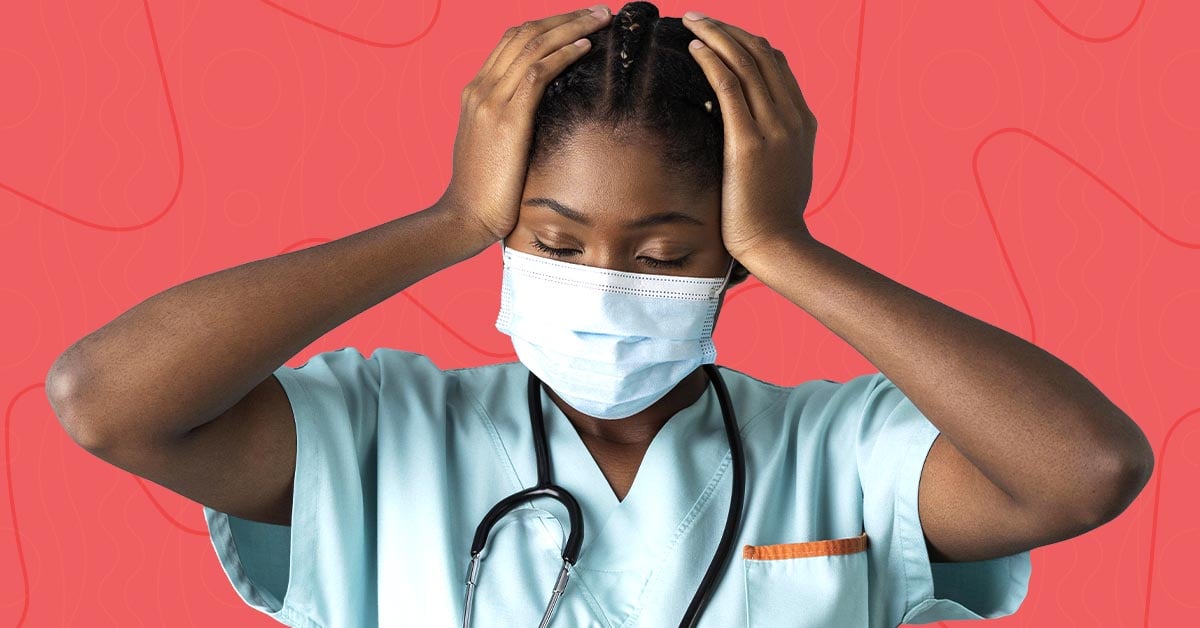
Going without health insurance can feel like a saving until the bill arrives. In Nigeria, where out-of-pocket payments still dominate health financing, a single hospital admission can wipe out months of income, force families to sell assets, or push them into debt that takes years to clear. This guide breaks down the real cost of staying uninsured, who it hits hardest, and what cover starts to look like in 2026.
Table of Contents
- Quick Definition Box
- What “No Health Insurance” Really Means in Nigeria
- How One Health Event Becomes a Financial Crisis
- The 6 Real Costs of Going Without Cover
- Common Misconceptions About Health Insurance
- nairaCompare Insight
- Quick Recap
- FAQs
- Related Resources
- Conclusion
Quick Definition Box
The real cost of no health insurance is not the premium you save; it is the medical bills, lost income, debt, and household disruption you face when illness strikes without cover.
What “No Health Insurance” Really Means in Nigeria
Most Nigerians still pay for healthcare directly when they need it. Out-of-pocket spending accounts for the majority of total health spending in Nigeria, one of the highest shares anywhere in the world. The National Health Insurance Authority (NHIA) Act 2022 made health insurance mandatory for all residents, but enrolment remains low. State health insurance schemes, NHIA-accredited HMOs, and private plans together cover only a fraction of the population.
When you have no cover, every clinic visit, prescription, scan, surgery, and admission must be paid in full from personal funds. There is no claim, no co-pay structure, no negotiated tariff. The hospital’s billing desk is your first and last line of defence.

How One Health Event Becomes a Financial Crisis
A health emergency does not stop at the consulting-room door. It moves through your finances in stages:
- Immediate bill: consultation, tests, drugs, and an admission deposit, often required upfront in private hospitals.
- Treatment costs: procedures, theatre fees, ward charges, and intensive care if needed.
- Drugs and follow-up: post-discharge medication, physiotherapy, specialist reviews.
- Lost income: time off work for the patient and at least one caregiver in the family.
- Forced asset decisions: dipping into savings, selling vehicles or land, taking emergency loans.
- Long-term debt: repaying loans at high interest, often from quick-loan apps.
Health economists call it “catastrophic health expenditure” when out-of-pocket costs exceed 10% of household income. In Nigeria, a single ICU admission for a working-class family can clear that threshold in a day.
The 6 Real Costs of Going Without Cover
1. Catastrophic medical bills. A complicated childbirth, road traffic accident, or cancer diagnosis can cost from several hundred thousand to several million naira in a private facility. Cardiac care, oncology, and major surgery quickly run into multiples of an average annual salary. With no insurer absorbing the bulk, the family carries the full weight.
2. Delayed or rationed treatment. Without cover, people often delay seeing a doctor, skip diagnostic tests, or self-medicate. The cheapest illness is the one caught early; the costliest is the one ignored. By the time symptoms force admission, treatment is more invasive and far more expensive.
3. Reduced quality of care. When you are paying line by line, you may opt for the cheapest hospital, the cheapest drug, the smallest scan. That is rational in the moment, but it can mean missed diagnoses, weaker generics, or facilities without proper emergency cover. Insurance pools risk so the patient can focus on getting better rather than on negotiating each invoice.
4. Debt and depleted savings. Many uninsured Nigerians turn to digital loan apps, family borrowing, or asset sales when a health bill lands. Quick-loan apps charge daily interest rates that compound rapidly. A ₦500,000 medical loan repaid over six months can easily cost ₦650,000 to ₦750,000 once interest, processing fees, and late charges are added.
5. Lost productivity and income. A serious illness usually takes the patient and at least one family caregiver out of active work. Salary earners may exhaust paid leave; self-employed Nigerians face weeks or months of zero revenue. Recovery costs do not stop at discharge, and lost earnings often outweigh the hospital bill itself.
6. Long-term household disruption. Children’s school fees, rent, business stock, and savings goals can all get rerouted to settle a single medical event. Families that experience one major uninsured health crisis can take years to rebuild. In some cases, the disruption is permanent.
Common Misconceptions About Health Insurance
"I am young and healthy, so I do not need cover."
Most major medical events that bankrupt households are accidents and acute conditions, not chronic illness. Road traffic crashes, appendicitis, malaria-related complications, and pregnancy emergencies do not check your age first.
"My employer’s HMO is enough."
Many corporate plans cover only the staff member, not dependants, and use a limited hospital network. A top-up family plan or a personal plan may still be needed.
"Insurance is too expensive on my salary."
Basic individual HMO plans in Nigeria can start from around ₦40,000 to ₦80,000 a year per adult on entry tiers, depending on benefits and provider. Family plans cost more, but typically well below the cost of a single uninsured admission.
"Claims never get paid."
Under the NHIA Act 2022, accredited HMOs must follow defined service standards. Claims do get paid where the policy terms, hospital network, and waiting periods are followed. Reading the policy document properly before enrolment is what protects you later.
"Government hospitals are free."
Public facilities are heavily subsidised, but consultations, tests, drugs, and consumables are still charged. They are usually cheaper than private hospitals, not free, and queues can mean long waits for non-emergency care.
nairaCompare Insight
For salary earners with families, the cheapest health insurance is the one bought before you need it. If your employer provides an HMO, check the hospital network carefully and consider a top-up family plan that covers your spouse and children at the hospitals you actually use. Even a basic family plan in the ₦150,000 to ₦300,000 range each year is a fraction of what one uninsured admission can cost in Lagos or Abuja, and it removes the worst-case scenario from your financial picture.
For younger professionals balancing rent, savings, and possibly maternity planning, look closely at what each plan includes before judging it on price alone. Maternity cover, dental, optical, and specialist referrals vary widely between HMOs at similar premiums. Our health insurance comparison tools let you line up benefits, hospital networks, and premiums side by side so the trade-offs are clear before you pay.
Quick Recap
- Going uninsured does not save money; it shifts cost from premium to crisis.
- A single major health event can wipe out savings and trigger long-term debt.
- The NHIA Act 2022 makes health insurance mandatory, but enrolment is still low.
- Comparing plans by hospital network and exclusions matters more than premium alone.
FAQs
How much does health insurance cost in Nigeria?
Individual HMO plans typically start from around ₦40,000 to ₦80,000 a year for basic cover, with mid-tier family plans ranging from ₦150,000 to ₦500,000 annually. Premiums vary by provider, hospital network, and benefits included.
Is health insurance compulsory in Nigeria?
Yes. The NHIA Act 2022 made health insurance mandatory for all residents of Nigeria. Enforcement is being phased in, with state schemes, employer schemes, and private HMOs all serving as routes to compliance.
What does basic health insurance usually cover?
Most basic plans cover outpatient consultations, prescribed drugs on the formulary, basic diagnostics, malaria treatment, and inpatient admission within the network. Maternity, dental, optical, and chronic-condition cover are often add-ons or higher-tier benefits. Always read the policy document for exclusions and waiting periods.
Can I get insurance after I am already sick?
You can still enrol, but pre-existing conditions are usually subject to waiting periods or specific exclusions. Cover for a known condition may not start immediately, and full disclosure during enrolment is required to avoid claim disputes later.
Are government hospitals really free for the uninsured?
No. Public hospitals are subsidised but still charge for consultations, drugs, tests, and consumables. Out-of-pocket payment is still required for most services unless the patient is on a state or federal health insurance scheme.
What happens if I cannot afford private cover?
State health insurance schemes and NHIA vulnerable-group programmes are designed to provide subsidised cover for low-income earners. Coverage and benefits vary by state, so checking with your state health insurance agency is the first step.
Conclusion
The real cost of no health insurance is rarely visible until something goes wrong. It is not just the bill, but the months of recovery, the borrowed money, the savings rerouted from other goals, and the quiet trade-offs between treatment quality and what you can pay that day. For most working Nigerians, the maths is straightforward: the right cover at the right price is far cheaper than one bad week at a hospital.
Use our health insurance comparison tools on nairaCompare to line up hospital networks, premiums, exclusions, and add-ons across NHIA-accredited HMOs. The goal is not to push you into the most expensive plan; it is to help you find the smallest level of cover that protects your family from the kind of bill that resets a household’s finances.
Terms and conditions apply. Please verify all details with the provider before purchasing.

Noella Lepdung
Noëlla Lepdung is a writer who makes magic with all sorts of content, helping businesses find their voice and meet their ambitions with cutting-edge but human-first advertising. Her portfolio features brands such as Budweiser, The Coca-Cola Company, Nivea, Leadway Group, Honeywell Foods, Monieworx, Kimberly-Clark, and WAMCO.


Other related articles