


.png?width=40&height=40&name=Rectangle%202052%20(2).png)
.png?width=40&height=40&name=Rectangle%202052%20(1).png)



-3.jpg?width=1200&height=628&name=Top%2010%20Health%20Insurance%20Plans%20in%20Nigeria%20in%202026%20(Affordable%20%26%20Reliable%20Options)-3.jpg)
%202.jpg?width=1200&height=628&name=Top%2010%20Health%20Insurance%20Plans%20in%20Nigeria%20in%202026%20(Affordable%20%26%20Reliable%20Options)%202.jpg)

.jpg?width=1200&height=628&name=Best%20Car%20Loans%20in%20Nigeria%20(2026%20Ranking).jpg)


.jpg?width=1200&height=628&name=Your%20Complete%20Guide%20to%20Comparing%20Health%20Insurance%20Plans%20for%20Businesses%20in%20Nigeria%20(2026%20Edition).jpg)
.png?width=1266&height=427&name=blog%20header%20(27).png)
.webp?width=1266&height=427&name=blog%20header%20(38).webp)
%20(1).jpg?width=1200&height=628&name=Complete%20Guide_%20Sending%20Money%20from%20UK%20to%20Nigeria%20(2026)%20(1).jpg)


.png?width=1266&height=427&name=blog%20header%20(19).png)
.png?width=1266&height=427&name=blog%20header%20(30).png)
.webp?width=1200&height=628&name=Health%20Insurance%20Cost%20Report%20(2026).webp)


Author Noella Lepdung
Introduction
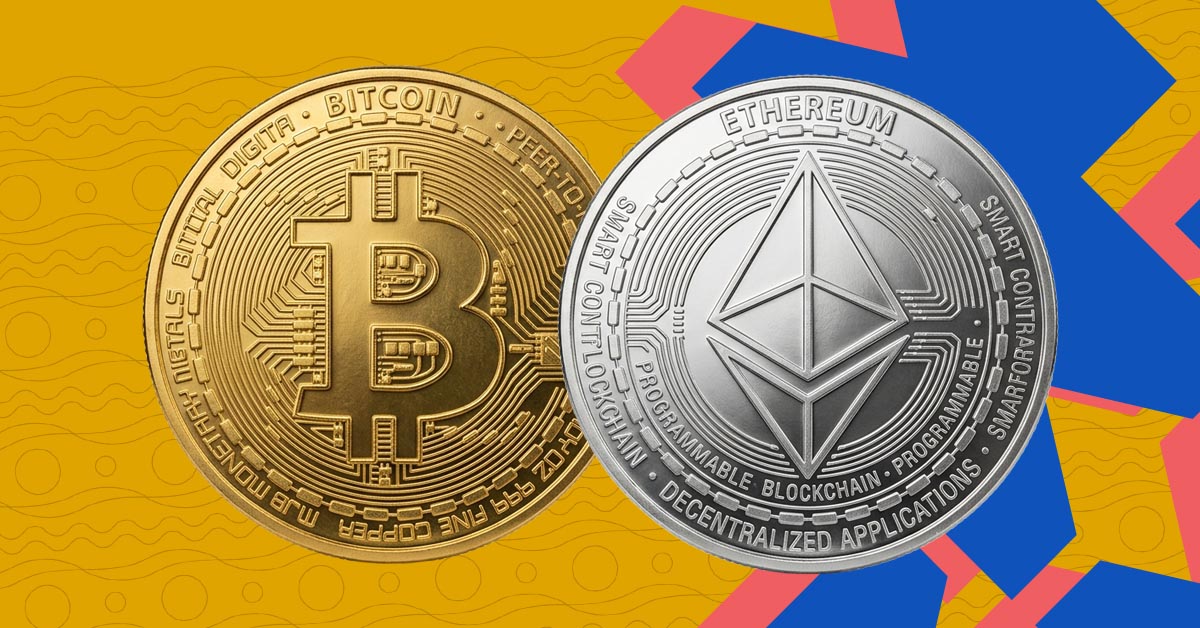
Bitcoin and Ethereum dominate the global crypto conversation, and Nigeria is no exception. Bitcoin offers the proven security of digital gold, whilst Ethereum opens the door to a programmable financial ecosystem. For Nigerian investors navigating naira depreciation, volatile markets, and SEC regulations under the Investments and Securities Act (ISA) 2025, choosing between the two is a real and consequential decision.
This comparison breaks down what each coin offers, what it costs, and which makes more sense for your situation.

Table of Contents
- Why This Comparison Matters
- Quick Comparison Table
- What is Bitcoin?
- What is Ethereum?
- Key Differences Breakdown
- Bitcoin: Pros & Cons
- Ethereum: Pros & Cons
- Cost Comparison
- Which One Should You Choose?
- Real-World Scenarios
- Common Misconceptions
- What Most Nigerians Choose
- nairaCompare Insight
- Frequently Asked Questions
- Conclusion
- Disclaimer

Why This Comparison Matters
Nigeria is one of Africa's most active crypto markets. With naira inflation eroding purchasing power and access to foreign-currency savings accounts still limited for most people, many Nigerians are turning to cryptocurrency as a hedge, an investment vehicle, or a way to hold dollar-equivalent value.
The stakes are real. Bitcoin trades above ₦100 million per coin in early 2026, whilst Ethereum sits between ₦5.5 million and ₦6.5 million. Whether you are allocating ₦50,000 or ₦5 million, the choice between the two directly affects your risk exposure, liquidity, and long-term potential.
Both coins are recognised as virtual assets under ISA 2025 and regulated by the Securities and Exchange Commission (SEC). Under the Nigeria Tax Act 2025, effective January 2026, capital gains on crypto are taxable at up to 25%, and transaction fees on licensed exchanges attract 7.5% VAT. These rules apply equally to both assets. For broader context on how the regulatory and market environment has shifted, our Q1 2026 Nigeria crypto trends review covers the key developments in full.
Quick Comparison Table
|
Feature |
Bitcoin (BTC) |
Ethereum (ETH) |
|
Approximate naira price (early 2026) |
₦100,000,000+ |
₦5,500,000–₦6,500,000 |
|
Market position |
#1 globally |
#2 globally |
|
Primary use case |
Store of value / inflation hedge |
Smart contracts / DeFi / programmable finance |
|
Supply cap |
21 million coins (finite) |
No hard cap (controlled issuance) |
|
Regulatory status in Nigeria |
Recognised under ISA 2025 |
Recognised under ISA 2025 |
|
Available on licensed Nigerian platforms |
Yes (Quidax, Luno, Busha) |
Yes (Quidax, Luno, Busha) |
|
Staking / passive income |
Not available |
3–5% approximate annual yield |
|
Volatility relative to each other |
High (lower than ETH historically) |
Very high |
|
Suitable for complete beginners |
Yes |
Moderate |
What is Bitcoin?
Bitcoin was created in 2009 by a developer known as Satoshi Nakamoto. It was the world's first cryptocurrency and remains the largest by market capitalisation. Unlike the naira or any government-issued currency, Bitcoin is not controlled by any central bank. Its supply is permanently capped at 21 million coins, a feature that underpins its reputation as a scarcity-driven store of value.
For Nigerians, Bitcoin's primary appeal is wealth preservation. As the naira has lost significant purchasing power over the past three years, those who converted savings into Bitcoin at earlier exchange rates have generally retained more dollar-equivalent value. Bitcoin is also the most liquid cryptocurrency in Nigeria, with the deepest naira trading pairs on licensed platforms.
Bitcoin is designed for simplicity and security. It does one thing well: transfer and store value. The network has operated without a major security compromise for over 16 years. For a broader look at Bitcoin alongside other coins available to Nigerian investors, our complete guide to crypto coins in Nigeria covers each asset's use case, risk profile, and naira pricing in detail.
What is Ethereum?
Ethereum launched in 2015 and introduced the concept of smart contracts: self-executing agreements coded directly onto a blockchain. Where Bitcoin is digital gold, Ethereum is often described as programmable financial infrastructure. Most of the wider crypto ecosystem, including stablecoins (USDT, USDC), decentralised finance (DeFi), and NFTs, is built on or connected to Ethereum.
Ethereum underwent a major upgrade in 2022, moving from energy-intensive mining to a proof-of-stake model. This allows ETH holders to earn staking rewards of approximately 3–5% annually, a feature Bitcoin does not offer. Transaction fees on Ethereum, known as gas fees, are variable and can spike sharply during periods of high network activity.
For Nigerian investors, Ethereum suits those who understand its utility, are interested in DeFi or on-chain applications, or are willing to hold through greater volatility in exchange for broader growth potential.
Key Differences Breakdown
1. Purpose and underlying value: Bitcoin's value proposition is straightforward: a finite, censorship-resistant store of value. Ethereum's value is tied to demand for its network. When more developers build applications on Ethereum, demand for ETH grows because it is used to pay for transactions and staking. This makes Ethereum more speculative, but also more versatile.
2. Price and volatility in naira terms: The higher per-unit naira price of Bitcoin can mislead beginners into thinking they must buy a whole coin. You do not. You can purchase a fraction worth ₦10,000 on any licensed exchange. That said, Ethereum is generally more volatile than Bitcoin on a percentage basis. Ethereum can move 20–30% in a single week during market swings, a range Bitcoin rarely matches.
3. Passive income through staking: Ethereum allows staking: locking your ETH to help validate transactions in exchange for a yield of roughly 3–5% per year. Bitcoin offers no comparable passive income mechanism. For a Nigerian investor holding ₦1 million in Ethereum, that represents approximately ₦30,000–₦50,000 in annual staking income before tax, though staking rewards fluctuate and are not guaranteed.
4. How to buy and send Bitcoin vs Ethereum in Nigeria: The process for buying and sending either coin follows the same broad steps on licensed platforms: register, complete KYC with your BVN and a valid government ID, deposit naira, and purchase your chosen coin. Bitcoin tends to have deeper naira liquidity and slightly faster execution on most local platforms. When sending either coin, wallet addresses are entirely different: a Bitcoin address cannot receive Ethereum and vice versa. Sending to the wrong address results in permanent, irreversible loss of funds. If you are still deciding which platform to use, our comparison of the best crypto exchanges in Nigeria breaks down fees, naira support, and security features side by side.
5. Tax and regulatory treatment: Both assets are treated identically under ISA 2025 and the Nigeria Tax Act 2025. Selling either coin for naira, swapping one for the other, or using to pay for goods are all taxable events. Neither offers a tax advantage over the other.
6. Network transaction fees: Sending Bitcoin between wallets incurs a modest, relatively predictable network fee. Ethereum gas fees can spike substantially during network congestion. For buy-and-hold investors, this difference is minor. For those transacting frequently or using DeFi, Ethereum's fee variability is a material consideration.

Bitcoin: Pros & Cons
Pros:
- Most established cryptocurrency globally, with a 16-year security record
- Deepest naira liquidity in Nigeria: easiest to buy and sell quickly at scale
- Finite supply creates natural scarcity, historically supporting long-term price appreciation
- Simpler to understand and hold for investors without a technical background
- Widely accepted for international transfers and peer-to-peer payments
Cons:
- No staking or passive yield generation
- High per-unit naira price can feel psychologically daunting, even though fractional purchases are available
- No support for smart contracts or decentralised applications
- Can still decline 40–60% during bear markets despite being the more established coin
- Less utility for investors interested in DeFi or Web3
Ethereum: Pros & Cons
Pros:
- Staking yields of approximately 3–5% annually provide a passive income option
- Powers DeFi, stablecoins, NFTs, and Web3 infrastructure, creating broad ecosystem utility
- Lower per-unit price makes it accessible for smaller naira budgets
- Continuous technical upgrades improving efficiency and reducing energy consumption
- Strong institutional and developer adoption driving ongoing network demand
Cons:
- Higher volatility than Bitcoin: price swings are steeper and more frequent
- Gas fees can spike significantly during high network activity
- More complex to understand: its value depends on grasping smart contract utility
- No hard supply cap introduces some uncertainty about long-term issuance dynamics
- Staking rewards are not guaranteed and vary with network conditions
Cost Comparison
Buying ₦100,000 of each coin on a licensed exchange (approximate):
|
Cost element |
Bitcoin |
Ethereum |
|
Coins acquired |
~0.001 BTC |
~0.018 ETH |
|
Platform trading fee (0.5–1%) |
₦500–₦1,000 |
₦500–₦1,000 |
|
7.5% VAT on fee |
₦37–₦75 |
₦37–₦75 |
|
Withdrawal to personal wallet |
₦500–₦2,000 (network fee) |
Variable gas fee |
Staking scenario for Ethereum (₦1,000,000 invested): At 3–5% annual yield, estimated staking income is ₦30,000–₦50,000 per year before tax. Rewards fluctuate and are not fixed.
Tax scenario: If you buy Ethereum at ₦5,500,000 and sell at ₦7,000,000, the ₦1,500,000 gain is taxable at up to 25% under the Nigeria Tax Act 2025, creating a potential ₦375,000 liability. The same calculation applies to Bitcoin gains. Consult a tax professional for your specific situation.
All prices are approximate and based on early 2026 market data. Verify current rates on your chosen platform before transacting.

Which One Should You Choose?
Choose Bitcoin if you: want a straightforward store of value, are investing in crypto for the first time, prefer the most liquid asset with the longest track record, or are primarily concerned with protecting naira purchasing power over a 2–5 year horizon.
Choose Ethereum if you: are comfortable with higher volatility, want to earn staking income on your holdings, are interested in DeFi or Web3 applications, or already hold Bitcoin and are seeking to diversify your crypto portfolio with a growth-oriented position.
Consider both if you: have ₦500,000 or more to allocate to crypto, want a Bitcoin foundation for stability alongside Ethereum for upside potential, or are building a long-term crypto position and want exposure to both the store-of-value and programmable-finance narratives.


Real-World Scenarios
Scenario 1: Tunde, 34, Lagos (first-time investor) Tunde earns ₦280,000 monthly and wants to protect some savings from naira depreciation. He has ₦150,000 to allocate to crypto. He chooses Bitcoin, buying approximately 0.0015 BTC on Quidax. His goal is to hold for two to three years. He is not interested in staking or DeFi, and values Bitcoin's straightforward store-of-value proposition as a starting point.
Scenario 2: Ngozi, 28, Abuja (tech-savvy investor) Ngozi works in software development and already holds ₦300,000 in Bitcoin. She adds Ethereum to her portfolio to access staking yields and follow DeFi developments. She purchases ₦200,000 in ETH on Luno and enables staking through the platform. She understands that her ETH value can swing significantly but is comfortable holding for three or more years.
Scenario 3: Emeka, 42, Port Harcourt (diversified approach) Emeka has ₦1 million to invest in crypto. He allocates 60% to Bitcoin (₦600,000) as his core inflation hedge and 40% to Ethereum (₦400,000) for growth potential. He purchases both on Quidax and transfers his holdings to a personal hardware wallet for long-term security. For investors taking a similar multi-asset approach, our guide to investing in Nigerian crypto platforms safely walks through the verification steps and security practices worth following before committing larger sums.
Common Misconceptions
" You can buy fractional amounts of Bitcoin or Ethereum starting from small naira values like ₦5,000." You do not. Both coins can be purchased in fractions on any licensed Nigerian exchange. ₦5,000 buys a proportional slice of either. Fractional ownership is standard.
"Ethereum is riskier, so Bitcoin is always the safer choice." Bitcoin is less volatile than Ethereum historically, but it is not safe by traditional financial standards. It has declined more than 60% during previous bear markets. Both carry a real risk of significant loss.
" Ethereum staking provides variable rewards, and income depends on network conditions and platform terms." Staking yields are not fixed. They fluctuate based on network activity, total ETH staked, and platform terms. The value of your staked ETH can also fall whilst it is locked.
" Bitcoin gains are taxable in Nigeria, including sales, swaps, and usage for payments. " This has not been accurate since January 2026. Under the Nigeria Tax Act 2025, selling Bitcoin for naira, trading it for Ethereum, or using it to pay for goods are all taxable events. Gains are subject to personal income tax at up to 25%.
"Ethereum will replace Bitcoin." Both coins serve fundamentally different purposes. Bitcoin is optimised for security and scarcity. Ethereum is optimised for programmability. Most informed investors treat them as complementary, not competing, assets.

What Most Nigerians Choose
Bitcoin remains the dominant crypto holding among Nigerian investors, accounting for the majority of naira-denominated trading volume on licensed platforms. Its familiarity, accessibility, and role as a naira hedge make it the first choice for most newcomers. Ethereum is the second most held coin, with stronger adoption among younger, technically oriented investors and those using DeFi platforms. Many experienced Nigerian crypto holders maintain both: Bitcoin as a long-term anchor and Ethereum for higher-growth exposure. Our review of the most reliable platforms for crypto investments in Nigeria covers which exchanges this growing group of active investors tends to use and why.

nairaCompare Insight
For a first-time Nigerian crypto investor, Bitcoin is the more appropriate starting point. If you are converting ₦50,000 to ₦300,000 of savings into crypto primarily to hedge against naira depreciation, Bitcoin's deeper liquidity and simpler value proposition reduce the likelihood of costly errors. Understanding how to buy and send Bitcoin is straightforward on platforms like Quidax or Luno, and the asset's 16-year track record provides a more legible baseline for managing expectations than Ethereum's more technically complex utility.
For investors ready to go beyond basic holding, Ethereum adds meaningful diversification. The ability to earn staking yields of 3–5% annually on holdings of ₦500,000 or more creates a passive income layer that Bitcoin cannot replicate. Our crypto comparison tool lets you view live BTC and ETH prices across licensed platforms side by side, so you can evaluate the true cost of each purchase and manage your allocation without switching between multiple apps.

Frequently Asked Questions
How do I buy Bitcoin or Ethereum in Nigeria?
Register on a licensed exchange such as Quidax, Luno, or Busha. Complete KYC verification with your BVN and a valid government ID. Deposit naira via bank transfer. Select BTC or ETH, enter your amount, review the exchange rate, and confirm. Your crypto will appear in your exchange wallet immediately.
How do I send Bitcoin or Ethereum to another wallet?
Navigate to the "Withdraw" or "Send" section of your exchange. Enter the recipient's wallet address carefully. Select the correct coin and amount, then confirm. Bitcoin and Ethereum use different networks: always send each coin only to its corresponding wallet address. Sending to the wrong address results in permanent, irreversible loss.
Can I buy both Bitcoin and Ethereum on the same platform?
Yes. Quidax, Luno, and Busha all support both BTC and ETH with naira trading pairs. You can hold both within the same exchange account.
Is Binance available for Nigerians buying Bitcoin or Ethereum?
Binance's naira pairs remain suspended as of 2026 and the platform does not hold a Nigerian SEC licence. Use licensed local alternatives such as Quidax, Luno, or Busha.
What is the minimum I can invest in Bitcoin or Ethereum? Most licensed platforms allow purchases from as little as ₦1,000–₦5,000. You do not need to purchase a whole coin.
Are Bitcoin and Ethereum gains taxable in Nigeria?
Yes. Under the Nigeria Tax Act 2025, effective January 2026, gains from selling, trading, or spending either coin are subject to personal income tax at up to 25%. Transaction fees on licensed exchanges also attract 7.5% VAT.
Is it safer to store Bitcoin or Ethereum on an exchange or in a personal wallet?
For long-term holdings, a personal hardware wallet provides stronger security. Exchanges carry operational and hacking risk. For small or actively traded amounts, a licensed exchange wallet is acceptable provided you have 2FA enabled and a withdrawal whitelist active.
Which coin is better for sending money internationally?
Both work for cross-border transfers. Bitcoin's network fees are generally lower and more predictable for straightforward transfers. Ethereum gas fees can be high during busy periods. Stablecoins like USDT, which run on Ethereum's network, are often preferred for international payments specifically because they eliminate price volatility during the transfer window.
Conclusion
Bitcoin and Ethereum are both legitimate, SEC-recognised crypto assets available on licensed Nigerian exchanges. The right choice comes down to your risk tolerance, investment horizon, and what you want your crypto holdings to do. Bitcoin is the cleaner starting point for wealth preservation. Ethereum offers broader possibilities but demands more from the investor in terms of understanding, patience, and risk tolerance.
You do not need to choose permanently or exclusively. Use our crypto comparison tool to view live BTC and ETH prices across licensed platforms, understand the true cost of each purchase, and build a position grounded in current market data rather than speculation.
Cryptocurrency investments are highly volatile and may result in significant losses. This is not financial advice.

Noella Lepdung
Noëlla Lepdung is a writer who makes magic with all sorts of content, helping businesses find their voice and meet their ambitions with cutting-edge but human-first advertising. Her portfolio features brands such as Budweiser, The Coca-Cola Company, Nivea, Leadway Group, Honeywell Foods, Monieworx, Kimberly-Clark, and WAMCO.


Other related articles